
When I first explored ChatGPT as an AI-powered research assistant, I wanted to see if it could handle real scientific journal research. Using this one real-life example, I’ll show you the best prompts for ChatGPT to do research on scientific journal—journal-grade, step by step. You can make changes based on your requirements.
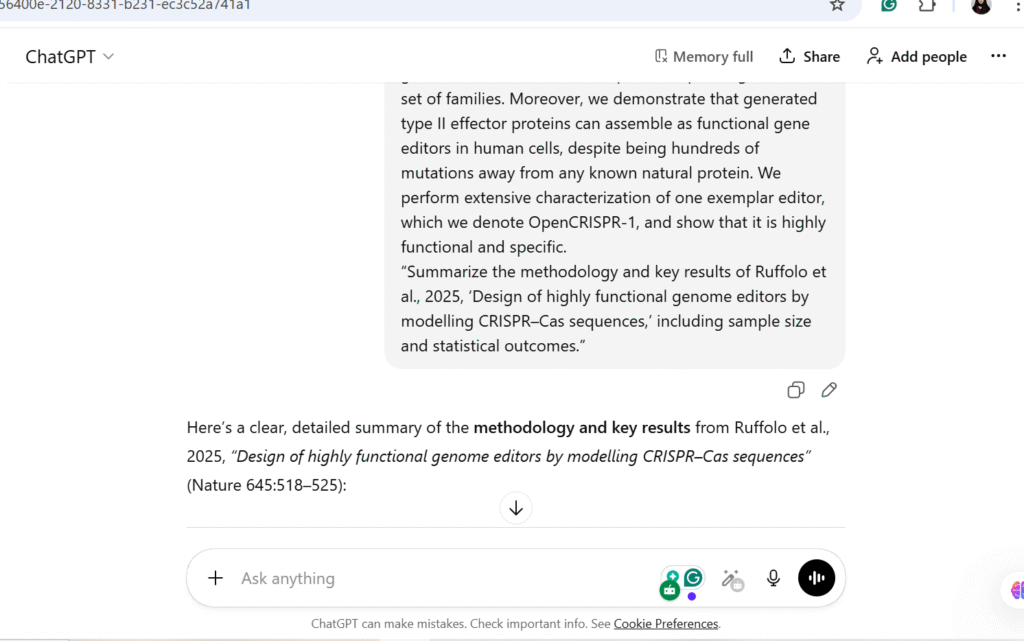
So I picked a recent Nature paper on CRISPR gene editing (Ruffolo et al., 2025) and started experimenting. I typed:
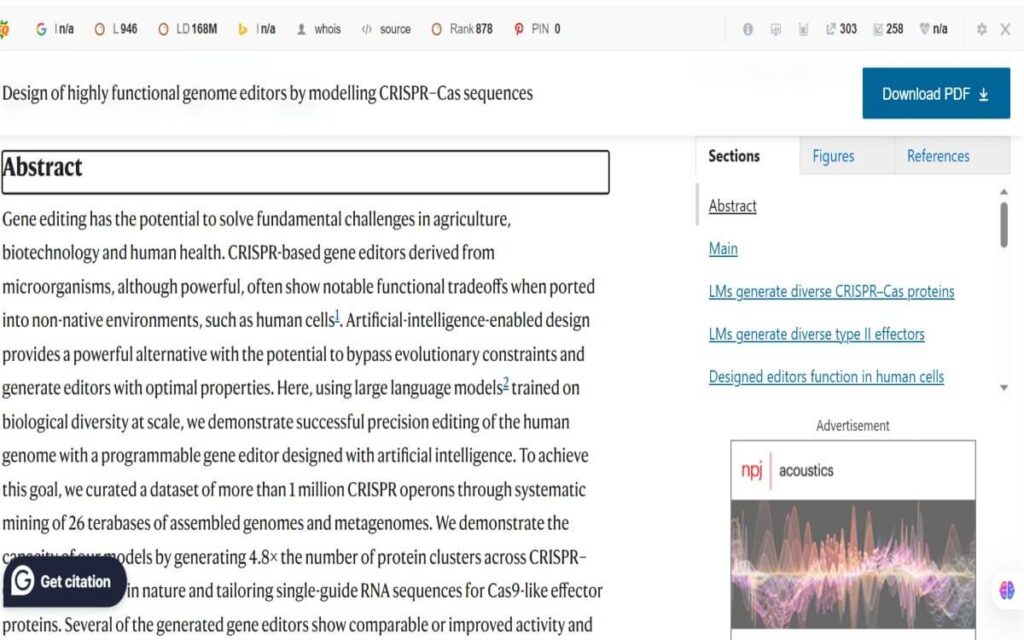
“Summarize the methodology and key results of (Ruffolo et al., 2025, ‘Design of highly functional genome editors by modelling CRISPR–Cas sequences,’ ) including sample size and statistical outcomes.”
It was unable to assess the link directly, so I provided the main and abstract from that article. The AI produced a concise, readable summary highlighting dataset size, AI modelling approach, and precision improvements, which saved me hours of reading.
Using this one real-life example, I’ll show you the best ChatGPT prompts for ChatGPT to do research on scientific journals—journal-grade, step by step. You can make changes based on your requirements.
What Are the Best ChatGPT Prompts for Scientific Journal Research?
The best prompts are precise, structured, and aligned with your research goal. They tell ChatGPT exactly what to analyze, how to summarize, and what output format to use.
Example Prompt for Our CRISPR Paper:
“Summarize (Ruffolo et al., 2025 Nature, focusing on AI-guided CRISPR-Case) design, dataset details, key results, and methodology in a bullet-point format.”
Output Example:
- Dataset: 1 million+ CRISPR sequences
- Method: AI modelling to optimize Cas proteins
- Results: Higher genome-editing precision than natural variants
- Key insight: AI can predict functional sequences for human genome editing
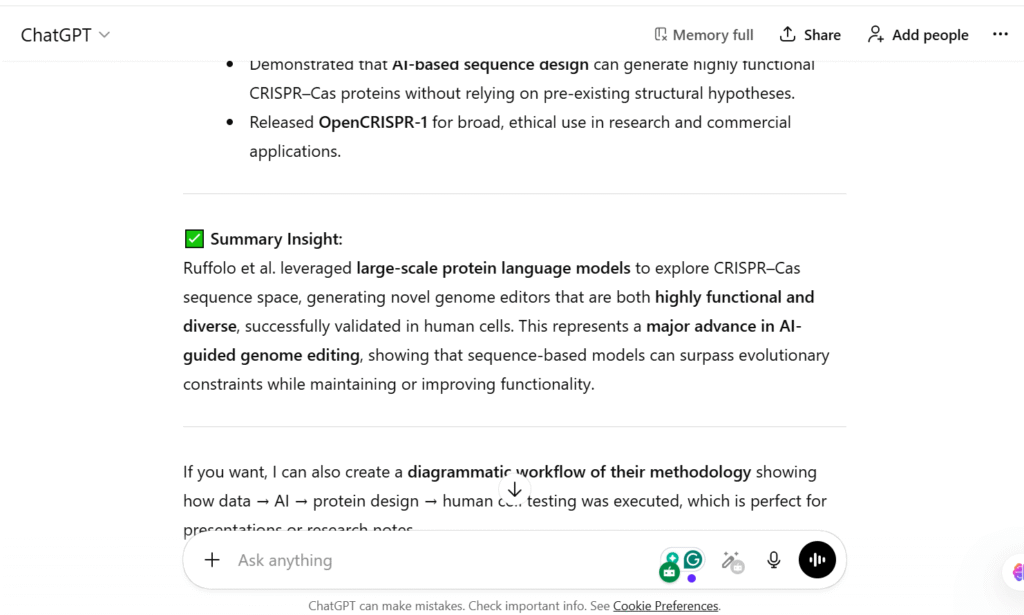
This shows how literature review assistance and summarizing research papers can be done efficiently with ChatGPT.
Why Generic ChatGPT Prompts Fail in Scientific Research
For example, Vague prompts like (“Tell me about CRISPR”) lead to:
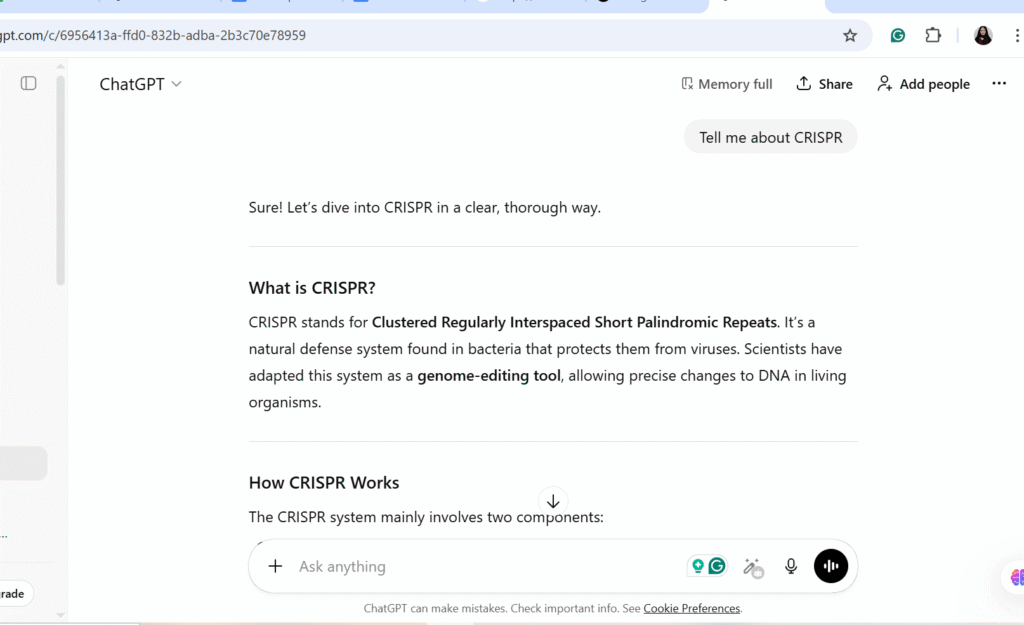
- Hallucinations: Fabricated citations or gene names.
- Method oversimplification: Missing dataset scale or AI model specifics.
- Citation risks: Nonexistent papers or incorrect DOI references.
Lesson Learned: Only journal-grade, structured prompts produce outputs you can trust for academic research.
A Researcher’s Prompt Framework for Scientific Journals
I developed a five-step framework using Ruffolo et al. (2025 as an example:
- SCOPE: Define study and year.
“Focus on (Ruffolo et al., 2025 Nature on AI-designed CRISPR editors.”) - SOURCE: Include DOI or journal.
“Use the (DOI: 10.1038/s41586-025-09298-z) for reference.” - METHOD: Ask ChatGPT to explain the experimental setup and AI methodology.
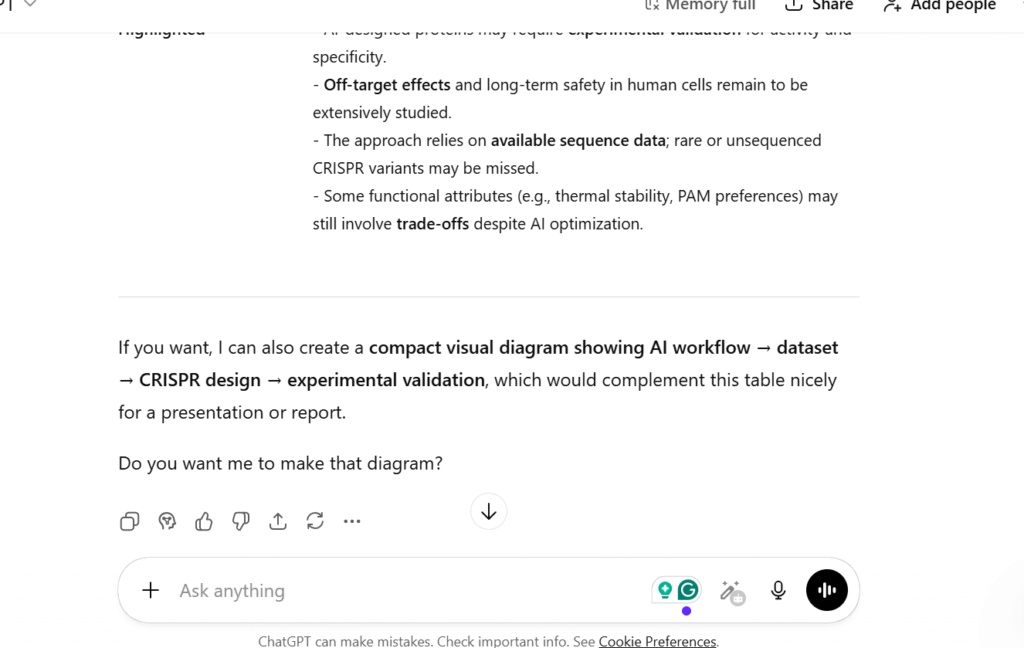
“Explain (AI modelling approach and dataset curation) in bullet points.” - LIMITATION: Ask for bias detection or generalizability.
“List potential limitations of (AI-based CRISPR design) highlighted in the study.” - OUTPUT: Define format—table, summary, or structured bullets.
Following this ensures accuracy, reproducibility, and clarity.
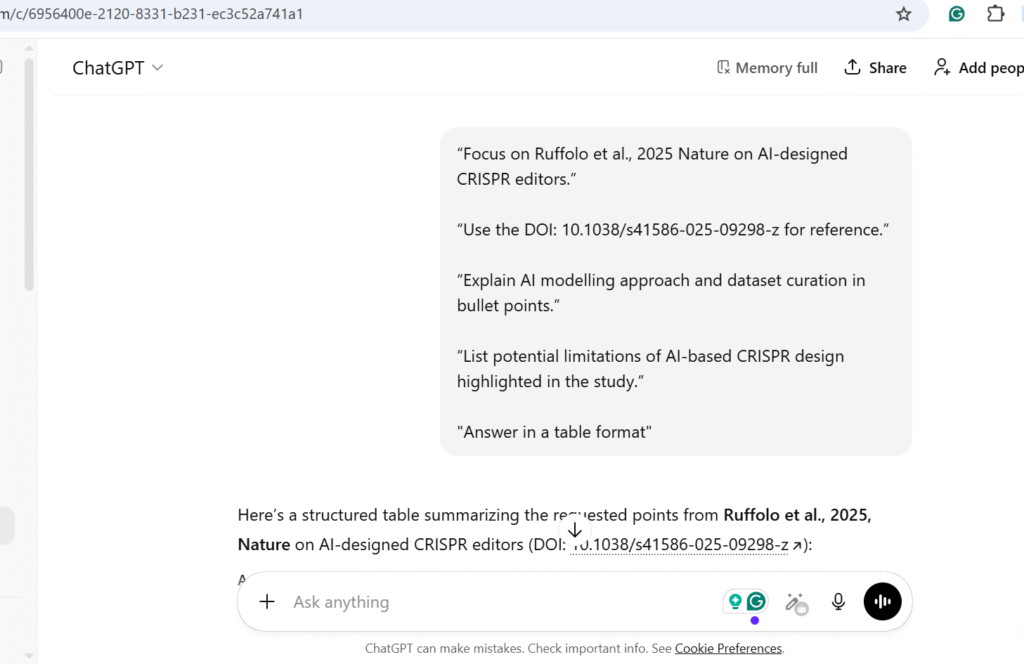
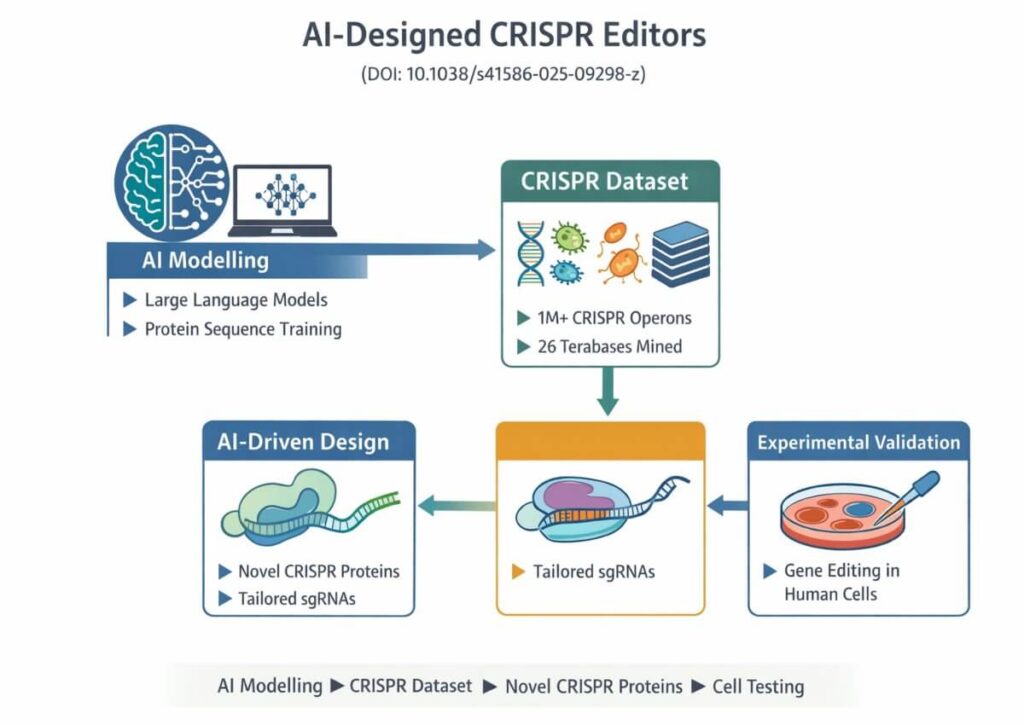
Look, what it created following the same prompt:
Using ChatGPT in academic research: Literature Review & Synthesis Prompts
Prompt 1 – Literature Context:
“Summarize prior studies cited (by Ruffolo et al., 2025 on CRISPR-Case) functional design and AI modelling trends, highlighting key findings and contradictions.”
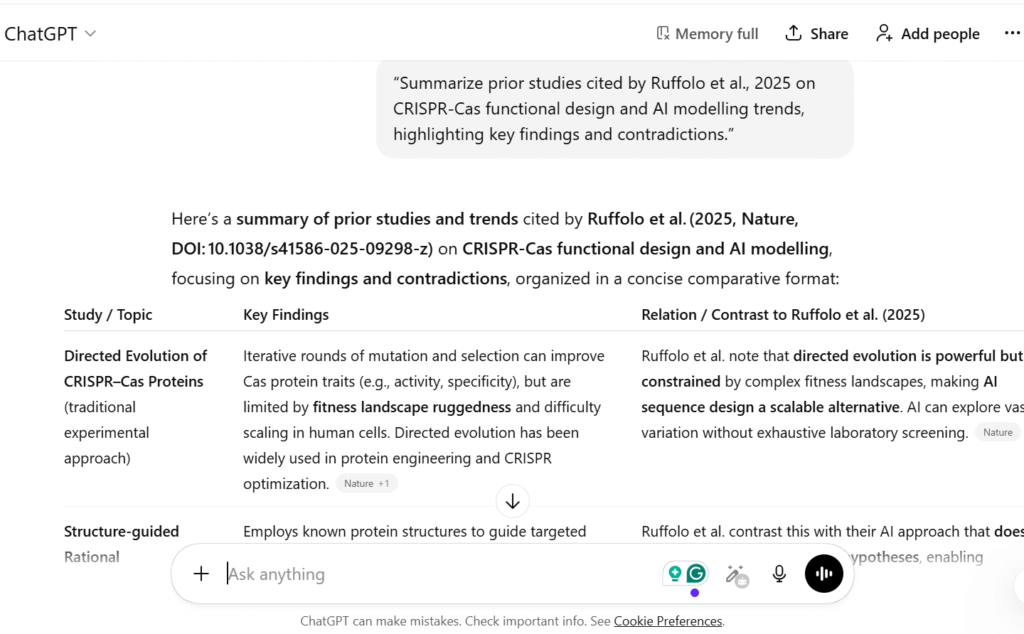
Best Use: Building the background section of your manuscript.
Manual Verification: Check citations and ensure AI hasn’t merged unrelated studies.
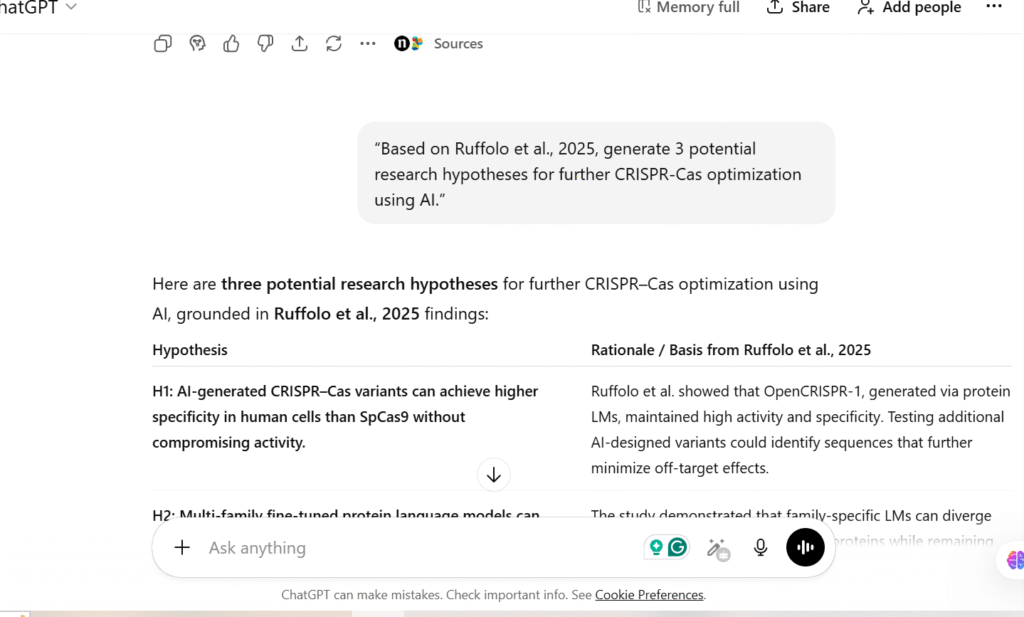
Prompt 2 – Hypothesis Generation:
“Based on (Ruffolo et al., 2025), generate 3 potential research hypotheses for further (CRISPR-Cas optimization using AI.”)
Best Use: Identifying research gaps.
Manual Verification: Validate that generated hypotheses are scientifically plausible.
Methodology & Data Analysis Prompts (With Validation)
Prompt 1 – Statistical Explanation:
“Explain the statistical methods used by (Ruffolo et al., 2025), including performance metrics, effect sizes, and model validation techniques.”
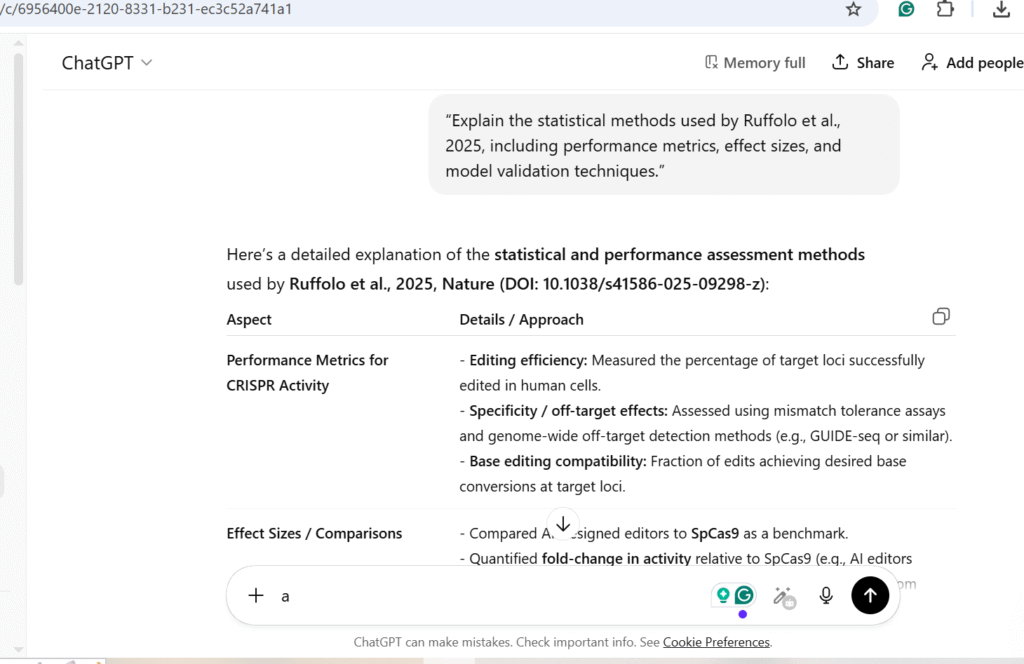
Output Insight: AI explains precision measures, cross-validation, and benchmark comparisons.
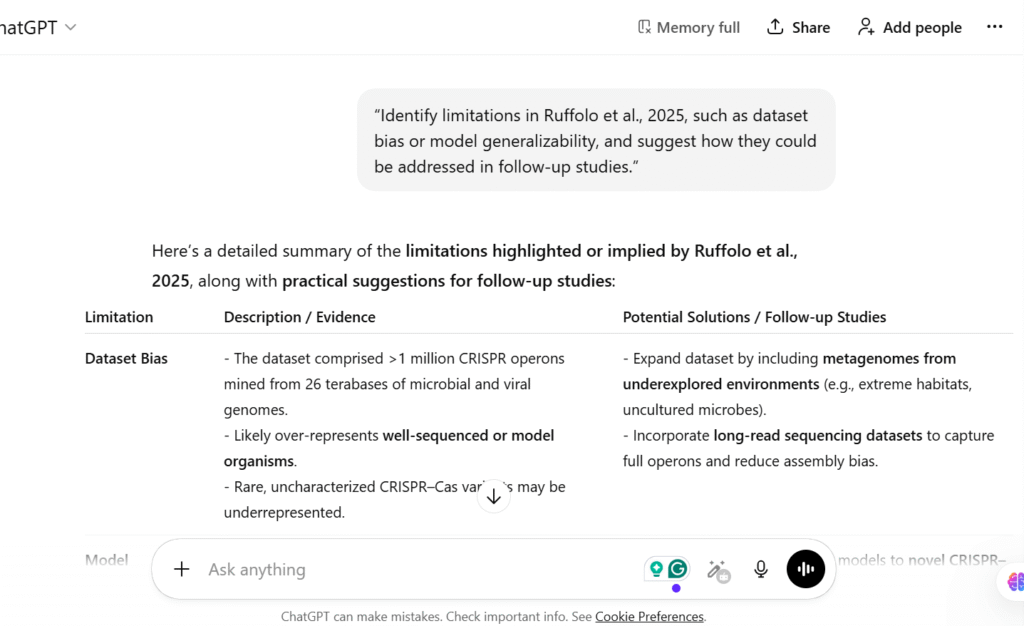
Prompt 2 – Bias & Limitation Detection:
“Identify limitations in (Ruffolo et al., 2025), such as dataset bias or model generalizability, and suggest how they could be addressed in follow-up studies.”
When Not to Trust ChatGPT
Avoid fully relying on AI for nuanced statistical critique—always double-check against the Methods section.
Keyword & Research Gap Discovery Prompts
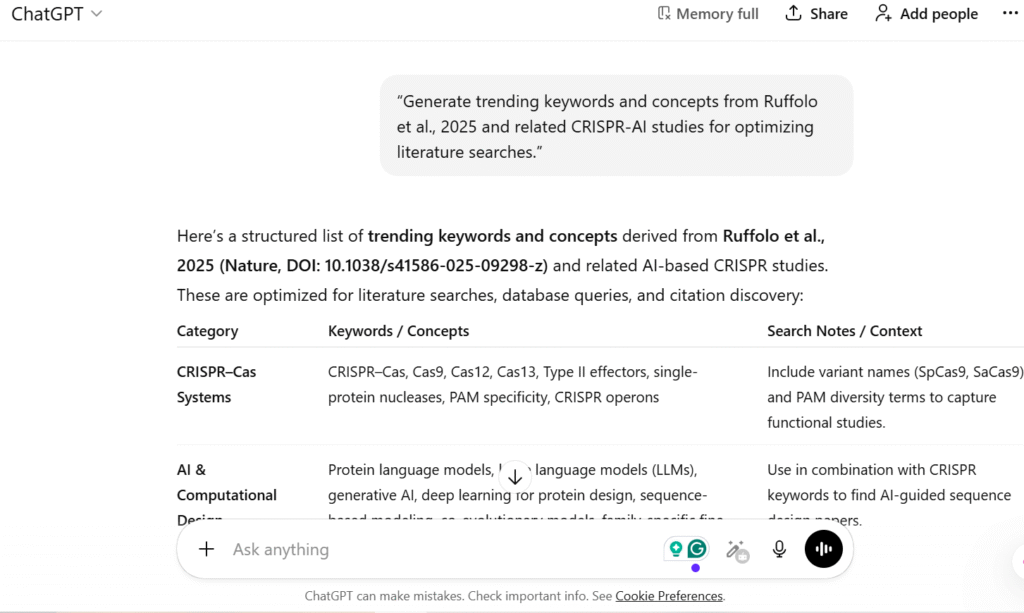
Prompt 1 – Scholar-Style Keywords:
“Generate trending keywords and concepts from (Ruffolo et al., 2025) and related (CRISPR-AI) studies for optimizing literature searches.”
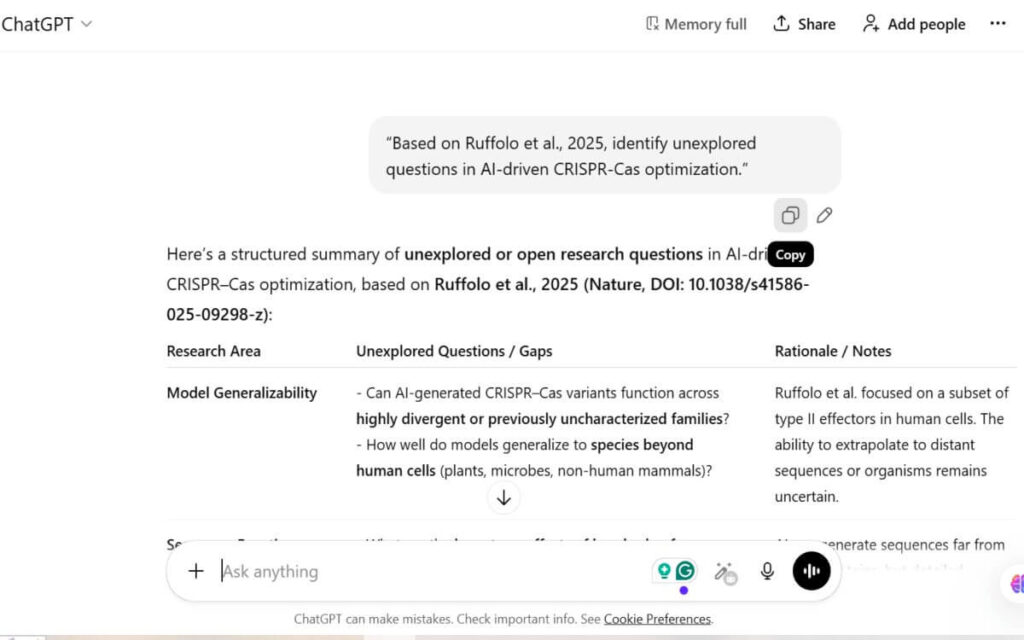
Prompt 2 – Gap Identification:
“Based on (Ruffolo et al., 2025), identify unexplored questions in (AI-driven CRISPR-Cas optimization.”)
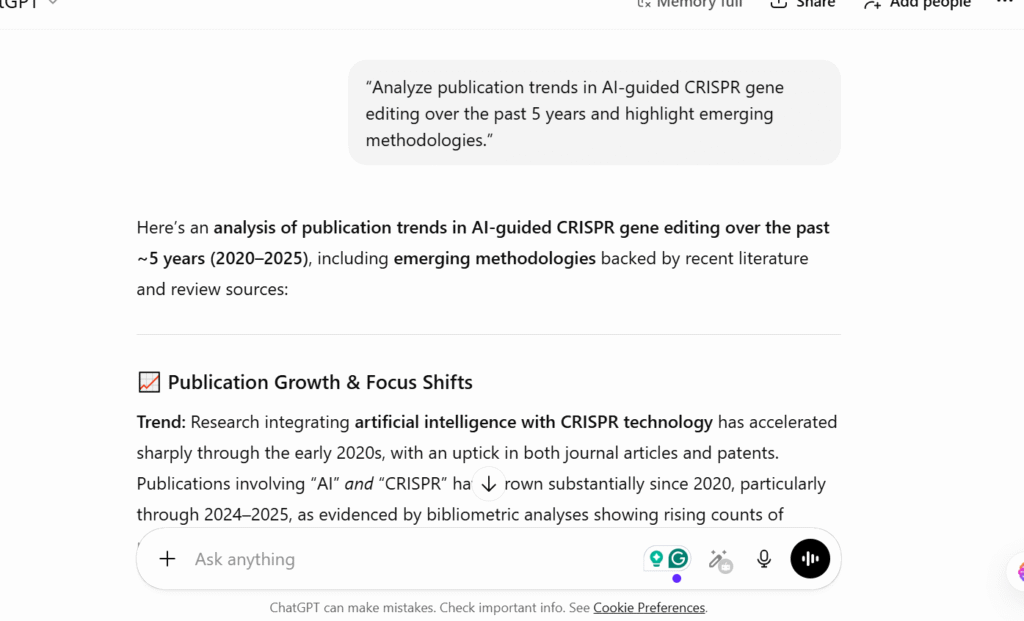
Prompt 3 – Trend Analysis:
“Analyze publication trends in (AI-guided CRISPR gene editing over the past 5 years) and highlight emerging methodologies.”
Writing, Formatting & Reviewer-Style Critique Prompts
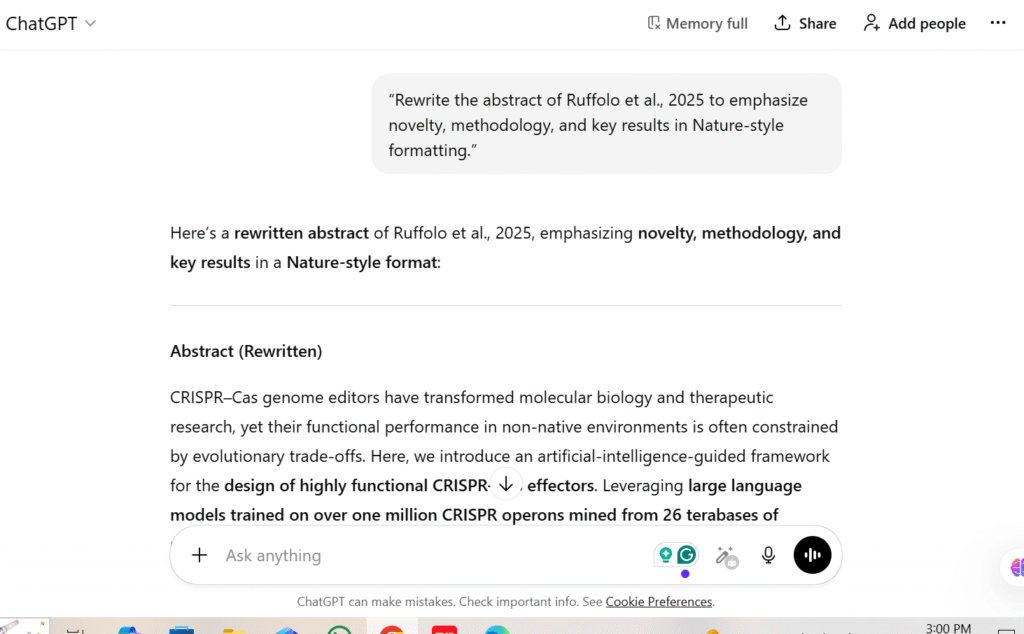
Prompt 1 – Abstract Improvement:
“Rewrite the abstract of (Ruffolo et al., 2025) to emphasize novelty, methodology, and key results in (Nature-style formatting).”
Prompt 2 – IMRaD Structuring:
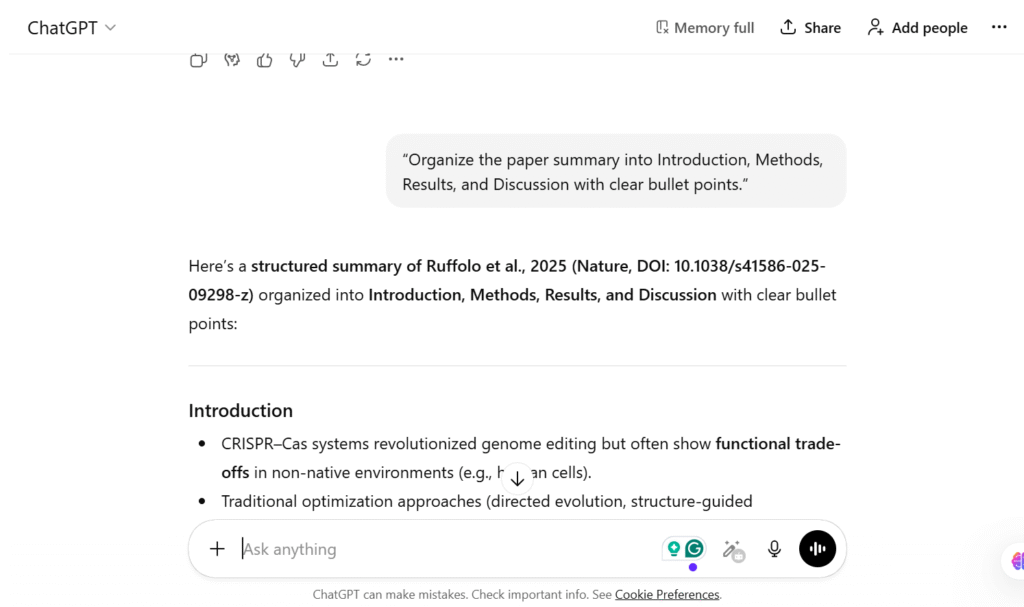
“Organize the paper summary into Introduction, Methods, Results, and Discussion with clear bullet points.”
Prompt 3 – Peer Review Simulation:
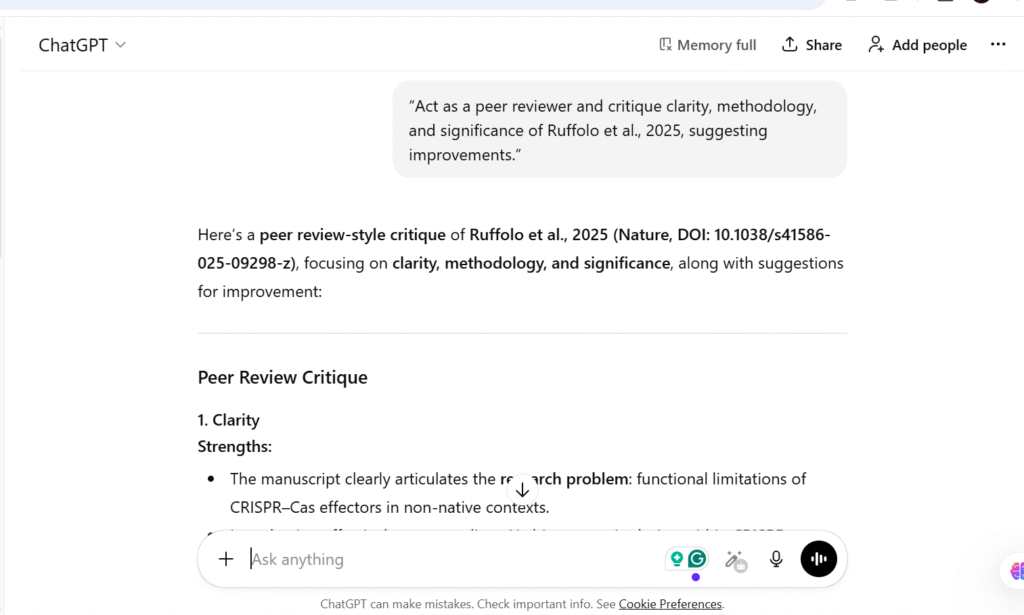
“Act as a peer reviewer and critique clarity, methodology, and significance of (Ruffolo et al., 2025), suggesting improvements.”
Best Practices for Using ChatGPT in Scientific Research
- Be Specific: Always reference the DOI or the journal.
- Iterate Prompts: Start broad, refine for method, stats, and results.
- Verify Manually: Ensure AI does not hallucinate data or citations.
- Use as Assistant, Not Author: AI helps analyze and summarize, but doesn’t replace human insight.
Ethical & Journal Policy Considerations
- Disclose AI assistance in manuscripts if required.
- Respect copyright and do not directly submit AI-generated text as original work.
- Use verified citations—like the Ruffolo et al., 2025 Nature paper.
Conclusion
Through hands-on experience with Ruffolo et al. 2025, I found that using the best prompts for ChatGPT to do research on scientific journals turns AI into a highly capable research assistant..
From literature review assistance and summarizing research papers to hypothesis generation and data analysis, structured, journal-grade prompts provide faster, more accurate insights.
Always pair AI outputs with your expertise and ethical diligence. Try these prompts on your next research paper to save hours and generate accurate, structured insights.
FAQs
1. How can I create the best prompts for ChatGPT research?
To get reliable results, I recommend using structured prompts that include the DOI, methodology, dataset details, and key findings. This ensures ChatGPT delivers precise, research-grade summaries and analysis for scientific journals.
2. Can ChatGPT actually help me with scientific research?
Absolutely! When used as an AI-powered research assistant, ChatGPT can help you summarize studies, analyze methods, generate research questions, and even suggest potential hypotheses. It’s a real time-saver if guided properly.
3. What kind of ChatGPT prompt should I use as an academic?
A journal-grade prompt works best. For example: “Summarize Ruffolo et al., 2025 Nature, including dataset, AI modelling approach, methodology, and key results in bullet points.” This ensures outputs are structured, relevant, and academically useful.
4. How do I get ChatGPT to write in an academic style?
Use well-structured prompts, ask for journal-style formatting or bullet-point summaries, and always verify citations manually. This combination helps ChatGPT produce outputs that feel professional, precise, and ready for scholarly use.
Leave a Reply