
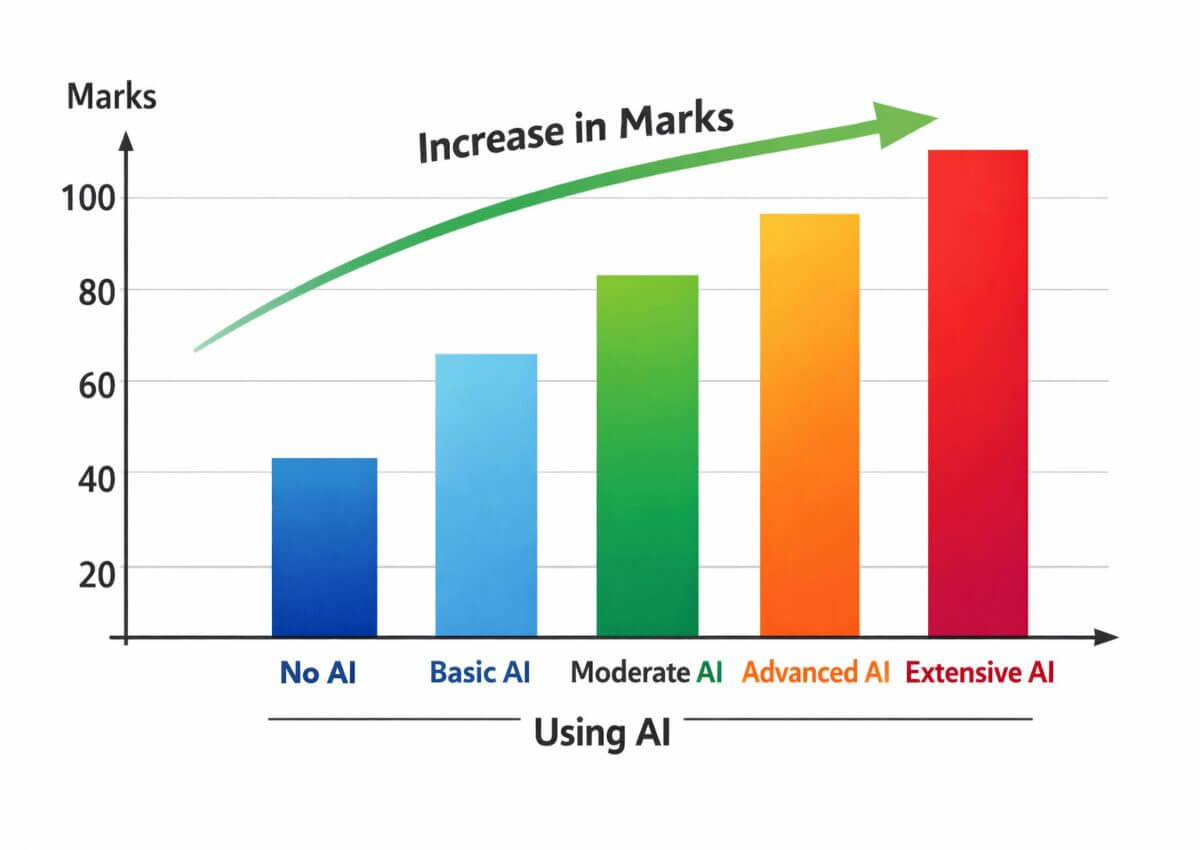
Most students don’t struggle with assignments because they’re lazy—they struggle because they’re overwhelmed, short on time, and unsure how to structure their answers. That’s where ChatGPT prompts for answering assignments can genuinely change the game.
When used correctly, ChatGPT doesn’t replace your thinking—it accelerates it. The right prompts help you break down complex questions, understand what the assignment is really asking, and move from confusion to clarity in minutes.
Instead of wasting hours stuck on “how to begin,” you can focus on learning, organizing ideas, and refining your own work.
Ready-to-Use ChatGPT Prompts for Answering Assignments
Understanding & Learning Prompts (The Tutor)
| Goal | Example Prompt | Notes |
| Explain a topic | “Explain [topic] like I’m a high school student.” | Simple, step-by-step explanation |
| Background check | “What prior knowledge do I need for [assignment topic]?” | Prepares students to approach assignments confidently |
| Concept comparison | “Create a table comparing [Concept A] and [Concept B].” | Ideal for study notes |
| Memory trick | “Give a memory trick or analogy for [difficult term].” | Makes recall easier |
Writing & Structuring Prompts (The Assistant)
| Goal | Example Prompt | Notes |
| Brainstorm ideas | “Help me brainstorm five unique essay topics about [subject].” | Encourages creative thinking |
| Generate thesis | “Write a thesis statement for an argumentative essay on [topic].” | Encourages creative thinking |
| Outline essay | “Outline a 1,000-word essay on the causes and effects of [topic].” | Provides structure |
| Rewrite paragraph | “Rewrite this paragraph in a formal academic tone: [paste paragraph].” | Improves clarity and tone |
Practice & Review Prompts (The Quizmaster)
| Goal | Example Prompt | Notes |
| Quiz yourself | “Quiz me on [chapter/topic] with 5 questions, one at a time.” | Immediate feedback |
| Practice problems | “Create 5 practice problems on [topic], from easy to hard, and check my answers.” | Builds mastery |
| Notes to the checklist | “Turn my notes into a checklist and 3-question self-test.” | Organizes learning |
| Teach-back | “Ask me to teach back what I learned about [topic], then ask follow-ups.” | Reinforces retention |
Subject-Specific Prompts
Math
- Understand:
“Explain this math concept from scratch using simple steps and one worked example.” - Solve:
“Solve this problem step by step and explain why each step is necessary.” - Practice:
“Create 5 practice problems similar to this one and check my answers.” - Review:
“Check my solution, point out mistakes, and show a better approach.”
Coding
- Debug:
“Explain this error message in simple terms and show how to fix it: [paste error].” - Logic clarity:
“Explain what this code is doing line by line: [paste code].” - Improve code:
“Refactor this code to make it cleaner and more efficient.” - Practice:
“Give me a small coding challenge based on this topic and review my solution.”
Science
- Concept clarity:
“Explain this concept using an analogy, diagram description, and bullet points.” - Assignment writing:
“Turn these notes into a short, well-structured assignment answer.” - Comparison:
“Compare [process A] and [process B] in a table with examples.” - Exam prep:
“Create 5 exam-style questions on this topic and explain the correct answers.”
History
- Context building:
“Explain the background and causes of this event in simple terms.” - Comparison:
“Compare [event A] and [event B] in a table, then summarize in a paragraph.” - Critical thinking:
“Explain the short-term and long-term impacts of this event.” - Essay help:
“Create a clear essay outline for this history question.”
English/Literature
- Understanding text:
“Explain this poem/story in simple language with key themes and symbols.” - Analysis:
“Analyze this passage focusing on tone, imagery, and meaning.” - Writing:
“Help me write a strong introduction for an essay on this topic.” - Improve draft:
“Improve clarity and flow in this paragraph without changing my ideas.”
Social Sciences (Psychology/Sociology)
- Concept explanation:
“Explain this theory using real-life examples.” - Application:
“Apply this concept to a real-world case study.” - Comparison:
“Compare two theories and explain their strengths and weaknesses.” - Revision:
“Turn these notes into exam-ready bullet points.”
How to Use ChatGPT Effectively for Assignments
Use AI as a Tutor, Not a Shortcut
I’ve learned that AI as a learning assistant is completely different from using it as a cheat tool. When I ask ChatGPT to explain concepts, guide me step-by-step, or quiz me on topics, I actually understand the material better.
On the other hand, copying full AI-generated answers may save time but hurts long-term learning, critical thinking, and writing skills. By using AI responsibly, I turn it into a study partner rather than a shortcut.
Frameworks to Guide AI: Prompt engineering for ChatGPT
Two frameworks have transformed the way I use ChatGPT for assignments:
1. P.A.C.E. Method
- Purpose: Define why you’re asking the AI (review, practice, explain).
- Action: Specify what AI should do (summarize, quiz, compare, provide examples).
- Context: Provide necessary details like class notes, chapter, or grade level.
- Explain: Tell AI how to present the response (step-by-step, bullet points, analogies).
2. Tutor / Assistant / Quizmaster Model
- Tutor: Explains concepts clearly. (Explain this concept step by step in simple terms, using examples I can relate to.)
- Assistant: Helps organize, outline, and write assignments. (Help me organize my assignment by creating a clear outline and improving my wording.)
- Quizmaster: Generates practice questions and checks answers interactively. (Test my understanding with practice questions and explain my mistakes as I answer.)
By combining these frameworks, I can structure my prompts in a way that ensures learning is the priority, not shortcuts.
Pro-Tips for Using ChatGPT Prompts for students Effectively
- Be specific: Include grade level, topic, and assignment type.
- Use personas: “Act as a history professor” or “Explain like a smart friend.”
- Iterate & refine: Ask for multiple variations or deeper explanations.
- Verify & fact-check: AI may make mistakes; always double-check.
- Avoid plagiarism: Ensure your final submission is written in your own words.
Common Mistakes to Avoid
- Copying full AI responses instead of using them as a guide.
- Relying solely on AI for understanding.
- Skipping verification of AI outputs.
- Using vague prompts that generate poor or generic responses.
Conclusion
Using ChatGPT prompts for answering assignments has transformed the way I study. By applying frameworks like P.A.C.E. and treating AI as a tutor rather than a shortcut, I’ve improved my understanding, critical thinking, and writing skills.
With the ready-to-use prompts, subject-specific guidance, and pro-tips shared here, students can maximize learning, reinforce knowledge, and stay academically honest. Remember, AI is most powerful when it supports learning, not replaces it.
FAQs
1. Can ChatGPT help me understand my assignments better?
Yes, it can—if you use it the right way. When you use explanation-based prompts, breakdowns, and examples, ChatGPT helps you build understanding with AI feedback instead of giving you shortcuts. This approach supports learning while keeping your work original and ethical.
2. How do I personalize ChatGPT prompts for my assignments?
You personalize prompts by telling ChatGPT exactly what you need. Include your subject, assignment type, grade level, and output format. Adding personas like “act as a tutor” or using step-by-step instructions improves results and helps you create effective ChatGPT prompts tailored to your learning style.
3. Is it safe to use ChatGPT for homework and assignments?
Yes, it’s safe when you use ChatGPT responsibly. Treat it as AI for learning, not a tool for copying answers. Focus on understanding concepts, organizing ideas, and practicing skills. Always verify and fact-check AI responses to maintain academic integrity.
4. Can ChatGPT check my answers and point out mistakes?
Absolutely. You can ask ChatGPT to review your work with prompts like “Check my answer and explain where I went wrong.” This turns AI into a study partner that helps you refine your thinking and improve accuracy without doing the work for you.
5. How many ChatGPT prompts should I use per assignment?
You should use multiple prompts for different stages. Start with understanding, move to structuring and writing, then finish with review and practice. This layered approach helps you maximize learning using AI prompts while producing higher-quality assignments.
Leave a Reply