

AI Tools for Beginners 2026: Top 15 Free Picks You Can Start Today
Did you know that AI is already helping millions of people boost productivity, create content, and learn new skills—without any coding experience? Yet, for many beginners, the world of AI seems confusing and intimidating. The truth is, starting with the right tools can make all the difference.
In this article, we’ll explore AI tools for beginners that are easy to use, practical, and free to try. From automation to writing assistants and image generators, these tools can transform the way you work, study, or even run a small business. By following this guide, you’ll discover how to confidently step into the AI world and make it work for you.
What Is AI and Why It Matters Today
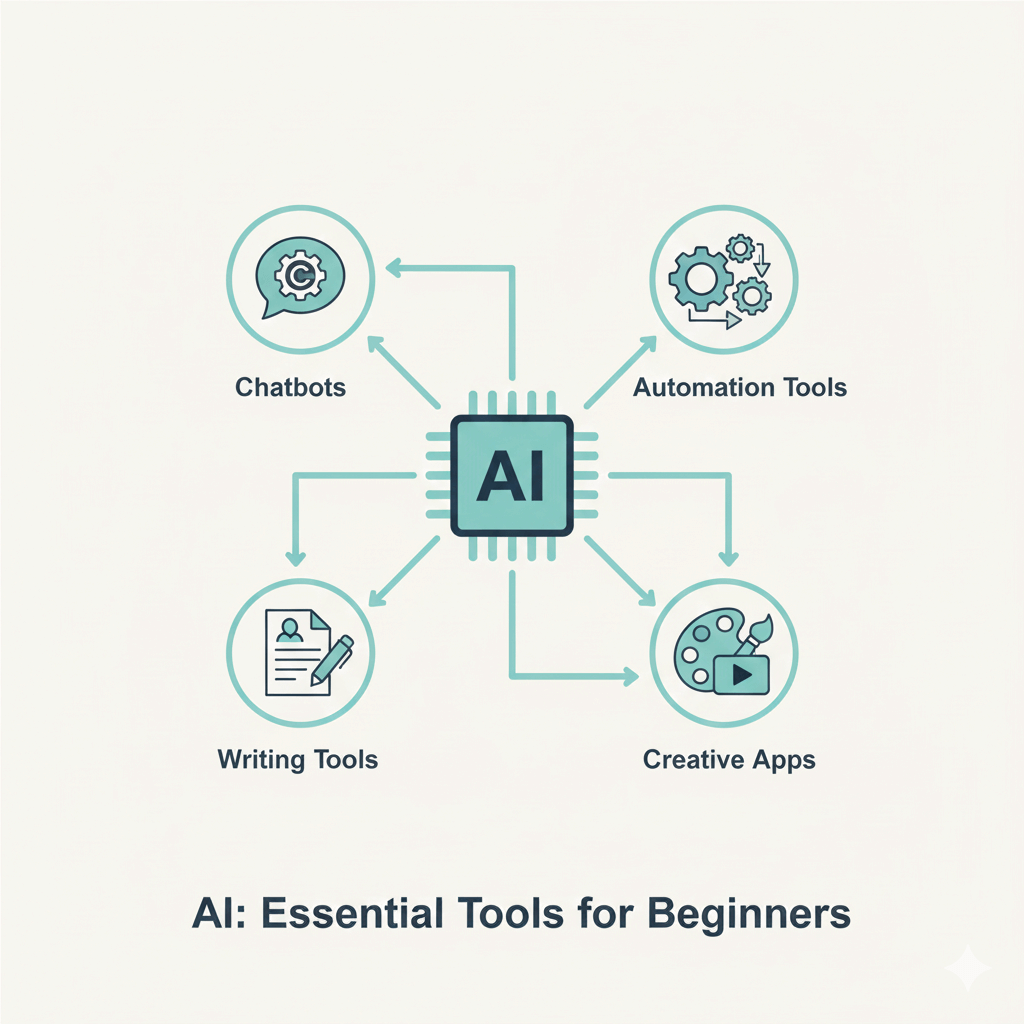
Artificial intelligence is the field of computer science that lets machines think, learn, and act in ways similar to humans. Today, generative AI and AI assistants have brought smart capabilities into everyday life. For people exploring AI tools for beginners, understanding this simple idea makes starting much easier.
AI now touches modern workplaces, digital tools, and daily routines in ways most people don’t even notice. From voice-activated apps to natural language generation chatbots, these systems help with writing, scheduling, and creative projects. Learning how AI works helps you make better choices when using these tools in school, work, or business.
Essential AI Knowledge for Complete Beginners
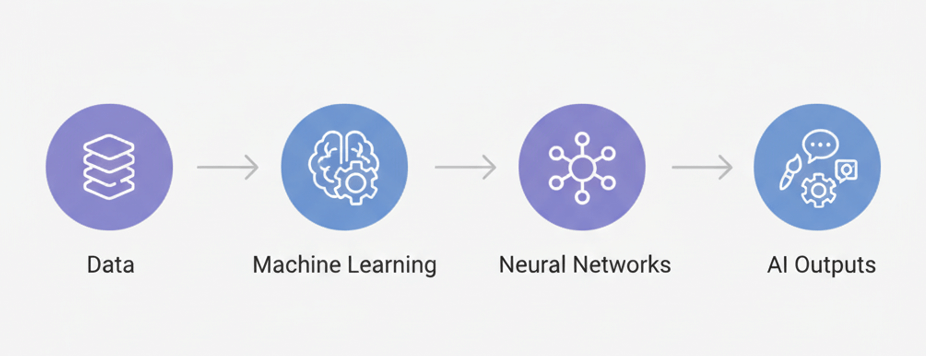
To start using AI tools for beginners, it helps to know some basic terms.
- Machine learning allows computers to learn from data without being explicitly programmed.
- Neural networks mimic the way human brains process information, helping AI recognize patterns.
- Automation is another key concept, letting AI handle repetitive tasks efficiently. Beginners also encounter prompts, which are instructions or questions you give AI to generate responses.
Understanding how AI tools actually work can remove a lot of confusion. Most AI you interact with today, like chatbots or content generators, relies on natural language processing to understand text.
While AI can do impressive tasks, it’s not perfect. Many myths suggest AI is all-knowing or fully autonomous, but in reality, it works best when humans guide it. Setting realistic expectations ensures beginners can use AI tools confidently and effectively.
5 Simple Ways to Get Comfortable With AI (Beginner-Friendly Tips)
Getting started with AI tools for beginners can feel overwhelming, but small steps make the journey easier. By exploring AI regularly, you build confidence and understand how these tools can enhance your work, learning, and daily routines. Beginners often see the most growth by experimenting, automating, and learning in short, manageable sessions.
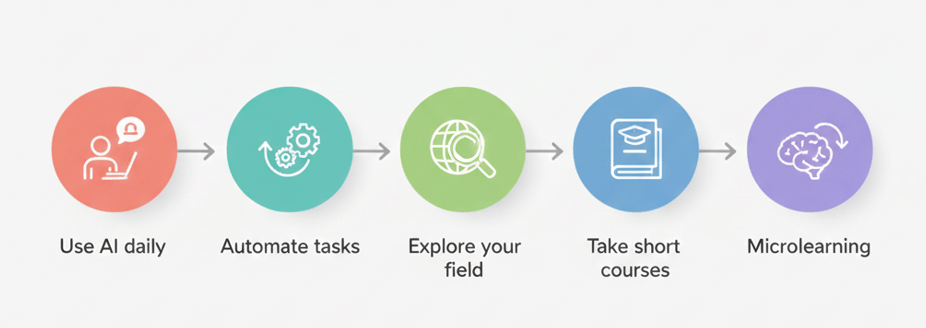
These five strategies focus on practical actions anyone can take. They are beginner-friendly, simple, and immediately applicable. Using these approaches, you’ll quickly feel more comfortable navigating AI assistants, generative AI, and other smart tools.
1. Start Using Free AI Tools Daily
Experimenting with free AI tools is one of the fastest ways to gain confidence. Simple tasks like asking a chatbot questions or generating text for a short project give hands-on experience. Beginners often find that daily interaction with AI improves familiarity and reduces hesitation,
2. Automate Boring, Repetitive Tasks
AI can save hours by automating simple workflows, like scheduling reminders or summarizing notes. Students, teachers, and professionals can quickly see the benefits of AI when routine tasks are handled automatically. Over time, automation increases productivity and frees up energy for creative work.
3. Explore How AI Fits Your Career or Industry
Different industries use AI in unique ways. Teachers can create lesson summaries, marketers can generate content ideas, and freelancers can automate research. Identifying the AI tasks most relevant to your field ensures that your learning aligns with real-world applications.
4. Take Short AI Courses to Build Confidence
Micro-courses designed for beginners make learning AI approachable. These short lessons, usually under an hour, allow beginners to understand key concepts without feeling overwhelmed. Platforms like Coursera, Udemy, or free YouTube tutorials offer excellent starting points for AI tools for beginners.
5. Practice Microlearning for Faster Skill Growth
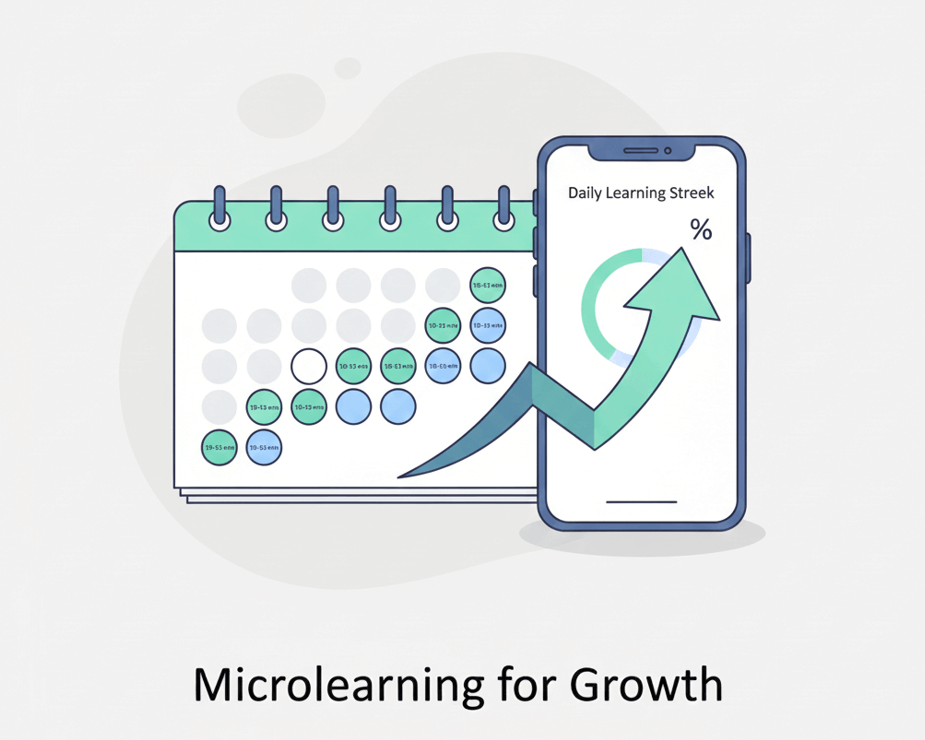
Small, daily learning sessions improve retention and make complex topics easier to grasp. Spending just 10–15 minutes exploring AI concepts or experimenting with a tool each day often beats long, infrequent lessons. This method also keeps motivation high and progress visible.
Why Microlearning Is Perfect for Busy Students & Professionals
Microlearning has become a game-changer for anyone trying to master AI tools for beginners without spending hours on long lessons. This approach breaks information into small, digestible segments that are easy to complete in just a few minutes each day. It fits perfectly into the schedules of students, working professionals, and freelancers who need efficient learning methods.
By focusing on short, targeted sessions, microlearning ensures that knowledge sticks. Beginners can immediately apply what they learn, which builds confidence and encourages consistent practice. This approach also reduces overwhelm, making AI concepts more approachable for people who may feel intimidated by complex technology.
Key Benefits of Microlearning
- With microlearning, you can gain meaningful AI skills in just 5–10 minutes daily.
- These short sessions help retain information better, improve focus, and make it easier to apply new knowledge to real-world tasks.
- For busy adults, this method ensures that learning stays consistent and motivation remains high.
- It’s an ideal strategy for mastering AI assistants, generative AI, and other beginner-friendly tools without disrupting daily routines.
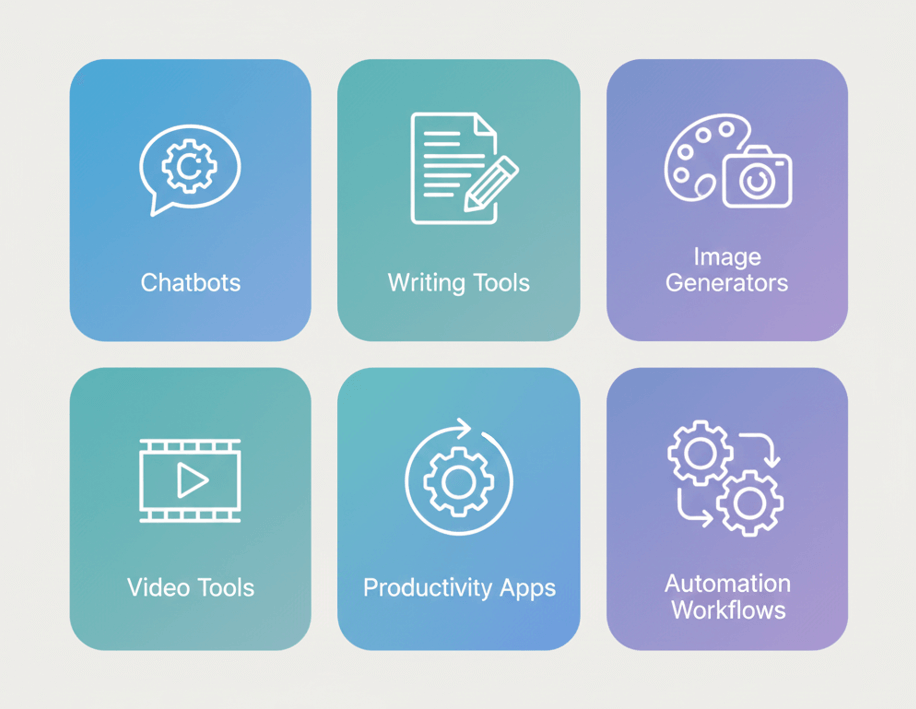
The Best AI Tools for Beginners in 2025 (Categorized List)
AI Assistants – ChatGPT, Gemini, Claude, Grok
Janitor AI assistants are the easiest starting point for anyone exploring AI tools for beginners.
- ChatGPT is great for writing, research, and everyday learning.
- Gemini works well for people in Google’s ecosystem because it connects smoothly with Gmail and Docs.
- Claude offers a calm, clear writing style that many users love.
- Grok is more casual and fast, especially helpful for quick summaries or fun explanations.
For complete beginners, ChatGPT is the simplest place to start because it understands natural prompts and gives step-by-step help.
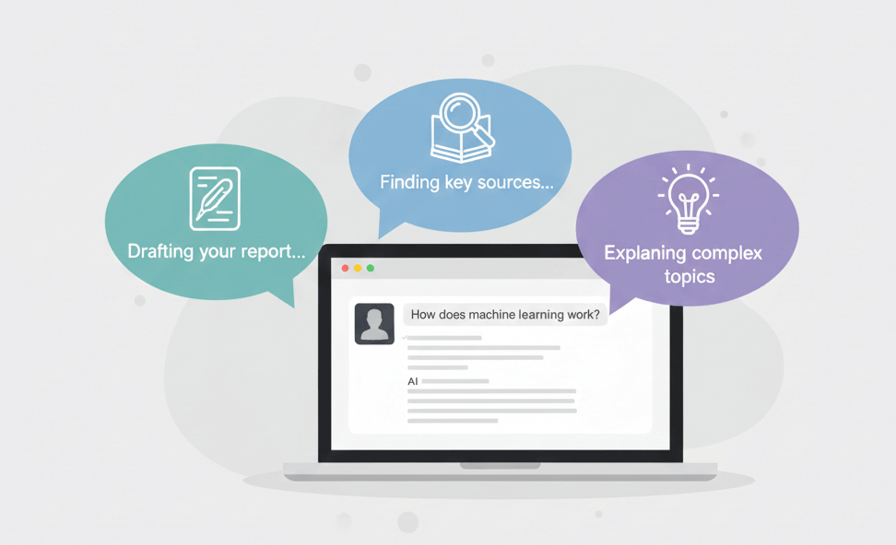
AI Writing Tools – Rytr, Sudowrite
Rytr and Sudowrite help beginners handle basic writing tasks without pressure. You can create emails, captions, short drafts, or simple blog outlines even if you have no writing experience. These tools guide your style, fill in ideas, and speed up the writing process. They also help new users build confidence by showing how to turn simple prompts into full paragraphs.
AI Image Generators – GPT-4o, Midjourney
GPT-4o and Midjourney make visual creativity easy for people who don’t know design. They can turn simple text prompts into images, concept art, or social media graphics. Beginners can start with small projects like icons, thumbnails, or simple illustrations.
- GPT-4o works best for quick, clean images, while Midjourney delivers more artistic results.
The only limitation is that complex scenes may require clearer prompts, but most beginners learn this naturally with practice.

AI Video Tools – Synthesia, Google Veo, OpusClip
Tools like Synthesia, Google Veo, and OpusClip help you create videos without editing skills or studios.
- Synthesia allows beginners to make talking-avatar videos in minutes.
- Google Veo focuses on high-quality scenes that look cinematic.
- OpusClip is perfect for turning long videos into short clips for social media.
These platforms are beginner-friendly because they handle the heavy work—editing, lighting, timing—automatically.
AI Productivity Tools – Notion Q&A, Fathom, Reclaim
These productivity tools simplify daily tasks for anyone learning AI tools for beginners.
- Notion Q&A helps you search notes instantly and understand your workspace better.
- Fathom records and summarizes meetings so you don’t miss details.
- Reclaim organizes schedules, reminders, and habits to keep you on track.
These tools make research, planning, and learning faster and easier for busy students or professionals.
AI Automation Tools – n8n, Manus
n8n and Manus introduce beginners to no-code automation. They let you connect simple actions like sending emails, saving files, or organizing tasks—without writing any code.
Beginners can automate small everyday workflows, such as saving attachments or sending reminders. Over time, these small automations reduce repetitive work and help users understand how AI can handle routine tasks efficiently.
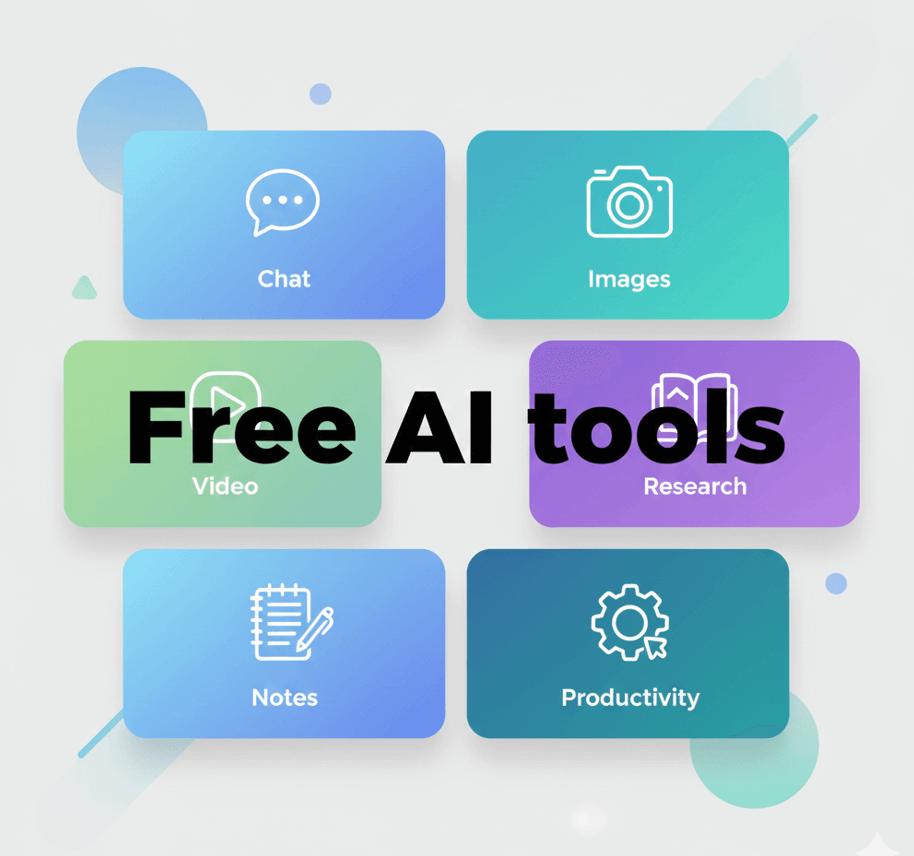
Free AI Tools Every Beginner Should Try First
Trying AI tools for beginners doesn’t have to cost anything. Many free apps offer powerful features that help you learn, experiment, and grow at your own pace.
These tools let you test prompts, create simple projects, and build your confidence without spending money. Free AI chatbots, image generators, and research tools are often more than enough for new users.
This is also the best way to discover which apps fit your workflow. When you explore different tools, you start understanding what each one does best. Over time, these small experiments help you develop practical skills that you can apply at school, work, or freelancing. Free tools allow you to learn safely, slowly, and consistently—without pressure or risk.
Best Free Chatbots to Test
Free chatbots like ChatGPT Free, Gemini, and Claude provide a great starting point for beginners. You can use them to write drafts, answer questions, solve homework problems, or learn new concepts. They help you understand how natural language prompts work and show how fast AI can support everyday tasks.
Free AI Video generator and Image Apps
Free video and image apps let beginners explore creative projects with no design skills. Tools like Canva’s AI image generator, GPT-4o mini, and CapCut’s AI video generator features help you transform simple text into visuals. They make it easy to create thumbnails, posters, short videos, or social media graphics.
Free AI Research and Productivity Tools
Tools like Notion AI (free plan), Perplexity, Google Search Generative Experience, and Fathom offer strong support for studying and work. They help with research summaries, note-taking, task management, and quick data gathering. Beginners can use these tools to stay organized and save time on everyday tasks.
How to Build Skills Without Spending Money
You can build real AI skills by practicing a little each day. Start with small tasks such as writing emails, creating images, or organizing notes. These free tools give you enough features to experiment with prompts, understand how outputs change, and explore new use cases. With consistent practice, you can grow your skills without upgrading to paid plans.
Teacher-Recommended AI Tools for Students & Educators
Teachers and students can benefit a lot from AI tools for beginners that are built with education in mind. These apps help make learning clearer, speed up research, and boost creativity. Educators have tested these tools in real classrooms and found they save time and support better outcomes. Each tool below has practical uses for projects, writing help, or lesson planning with AI productivity tools at the heart.

Using these recommended tools, students feel less overwhelmed by tasks like research, drafts, presentations, or study summaries.
Many apps use natural language generation and language understanding to turn simple prompts into useful responses. This makes tech feel more like a helpful partner than a complicated system.
Brisk Teaching
Brisk Teaching is designed for classroom use and helps teachers create quick lesson plans and summaries. Many educators say it saves hours by turning teacher notes into clear, student-friendly text. Students also use it for reviewing subjects before tests.
Snorkl
Snorkl helps students explore topics through AI-generated explanations and simple visuals. It’s great for learners who struggle with complex subjects because the tool breaks ideas into easy chunks. Teachers often use it to support differentiated learning.
NotebookLM
NotebookLM lets users ask questions about notes and textbooks like a tutor. This tool uses prompt engineering to find answers fast. Beginners find this helpful for homework because it explains topics in everyday language.
TeacherServer
TeacherServer organizes class materials and student submissions with smart tagging and search. It uses AI assistants to help teachers find resources quickly. Many educators say it reduces time spent on boring admin work each week.
Suno
Suno is an AI music generator that students use to create soundtracks for presentations or creative projects. It helps learners think more creatively and makes projects more memorable. Teachers find it fun and useful for arts and multimedia classes.
How AI Can Boost Your Career, Business, and Learning
AI is opening new opportunities for people at every skill level, especially when they use AI tools for beginners that simplify complex tasks.
- These tools make work faster, support better decisions, and help you learn important skills without stress.
- Many of them rely on AI assistants and AI productivity tools to turn your ideas into clear, practical results.
- People in different fields now use AI every day because it supports growth and saves time.
- Whether it’s students preparing for exams or business owners improving customer service, these tools adapt to different needs.
- Modern systems use language understanding and natural language generation to respond in a way that feels human and supportive.
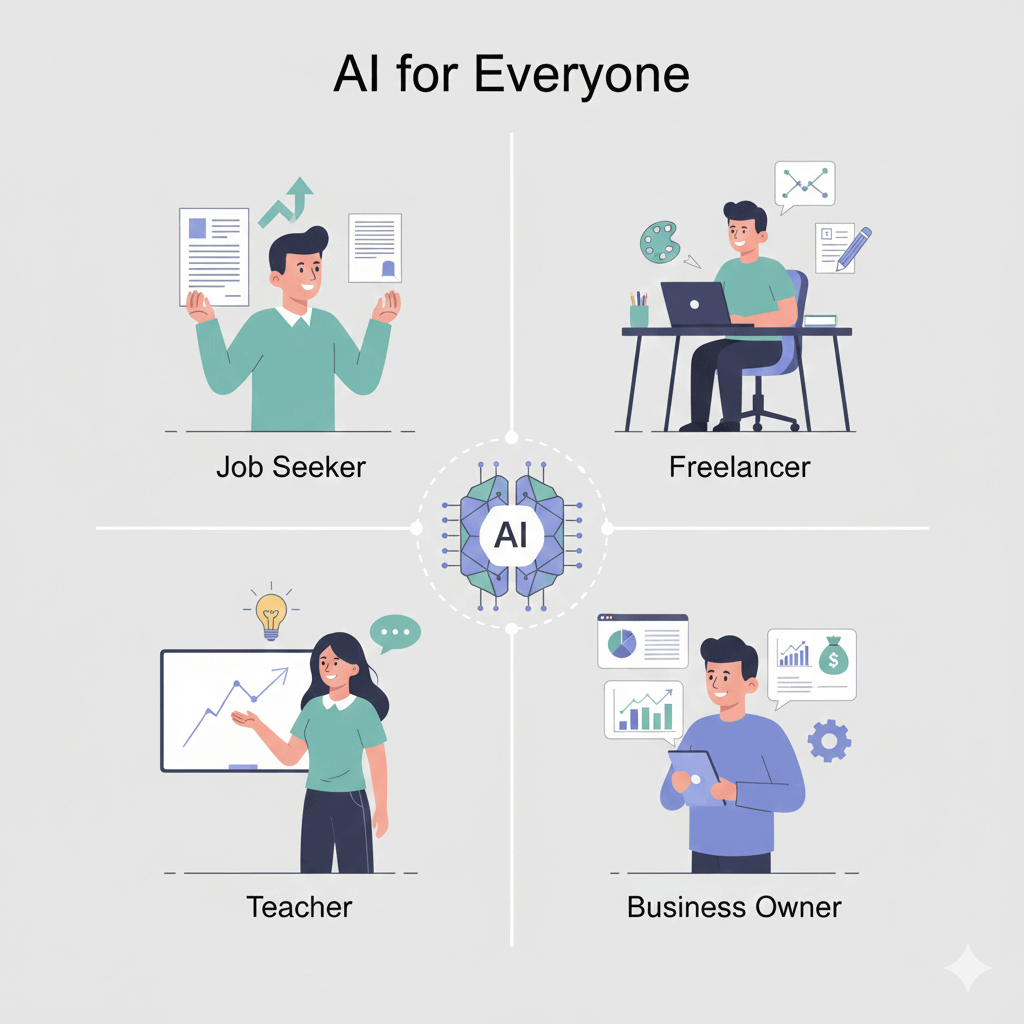
AI for Job Seekers
AI helps job seekers write clean resumes, prepare for interviews, and learn new skills. Tools that use prompt engineering can check grammar, rewrite descriptions, and even generate sample interview questions. This makes the whole job search process feel more organized and less overwhelming.
AI for Freelancers
Freelancers use AI productivity tools to speed up content creation, automate routine tasks, and deliver faster results to clients. These tools help with writing drafts, creating images, and planning workloads. Many freelancers say AI lets them take on more projects without feeling burned out.
AI for Teachers/Students
Teachers and students benefit from AI tools for beginners because they make studying, note-taking, and lesson planning easier. Tools that rely on natural language generation can explain difficult topics in simple terms. This helps both teachers and learners stay more focused and confident.
AI for Business Owners
Business owners use AI to improve marketing, customer service, and everyday operations. Many rely on AI assistants to answer questions, generate social posts, or organize tasks. Some even use AI video tools to create quick promotional videos without hiring a full team.
FAQs
1. What are the best AI tools right now?
The best tools depend on what you want to do, but most beginners start with chatbots like ChatGPT or Gemini because they are easy, fast, and support language understanding. If you need visuals, generators like Midjourney or GPT-4o give strong results with simple prompts. For videos, tools like Synthesia and Veo offer fast creation even if you have no editing skills.
2. Which AI tools are free to use?
Many AI tools for beginners offer powerful free plans. ChatGPT Free, Canva, Runway Mini, and NotebookLM give enough features for learning and basic projects. These tools help you experiment with ideas and practice prompt engineering without paying for upgrades.
3. What are the main types of AI tools?
The main types include chatbots, writing tools, image generators, video creators, and AI productivity tools. Each type uses technology like natural language generation to understand your request and give a quick output. Once you learn one category, it becomes easier to explore the others.
4. What is the most powerful AI tool in 2025?
In 2025, the most advanced systems are ChatGPT-5.1, Gemini Ultra, and Claude Opus. These models handle complex tasks, long conversations, and deep reasoning. They also work well for creators because they connect with AI video tools, research platforms, and writing apps.
5. What are the top 5 AI tools for productivity?
The top productivity tools include Notion Q&A, Reclaim, Fathom, ClickUp AI, and Zapier. These apps help you manage tasks, meetings, and planning. Most beginners use them because they remove small daily tasks, save time, and work smoothly with chat-based AI assistant.
Recommended Resources to Learn AI Faster
Learning AI can feel overwhelming, but the right resources make it easier and more enjoyable. For beginners, using blogs, courses, and videos tailored to newcomers helps build confidence and skills quickly. Starting with AI tools for beginners ensures you can practice while you learn, turning theory into action.
AI literacy grows faster when you explore different formats. Combining written guides, video tutorials, and microlearning sessions allows you to understand both concepts and real-world applications. This balanced approach works well for students, professionals, and freelancers alike.
Beginner-friendly blogs
Blogs like Towards Data Science, Medium’s AI section, and The AI Report offer simple explanations and real examples. These sites break down concepts like natural language generation and automation in easy steps, perfect for anyone testing AI tools for beginners without prior experience.
Best free/paid courses
Free courses on Coursera, Udemy, and EdX cover AI basics in a beginner-friendly way, while paid options provide more structured paths and certifications. These courses often include hands-on exercises using AI assistants and other practical tools to practice real tasks.
YouTube channels with easy AI lessons
YouTube channels such as AI Explained and Simplilearn offer short tutorials for quick understanding. Watching real demonstrations of AI productivity tools and chatbots helps beginners see results immediately without feeling lost in theory.
Microlearning platforms for quick skill building
Platforms like Skillshare, LinkedIn Learning, and Brilliant offer small, daily lessons ideal for busy students and professionals. Microlearning strengthens retention, making it easier to grasp prompt engineering and AI workflows while building confidence with AI tools for beginners.
Take Your First Step Toward AI Mastery
Starting your AI journey can feel intimidating, but every expert was once a beginner. The key is to begin small and stay consistent. Using AI tools for beginners allows you to explore practical applications right away, helping you gain confidence and see results quickly. Even a few minutes a day can make a noticeable difference in understanding AI.
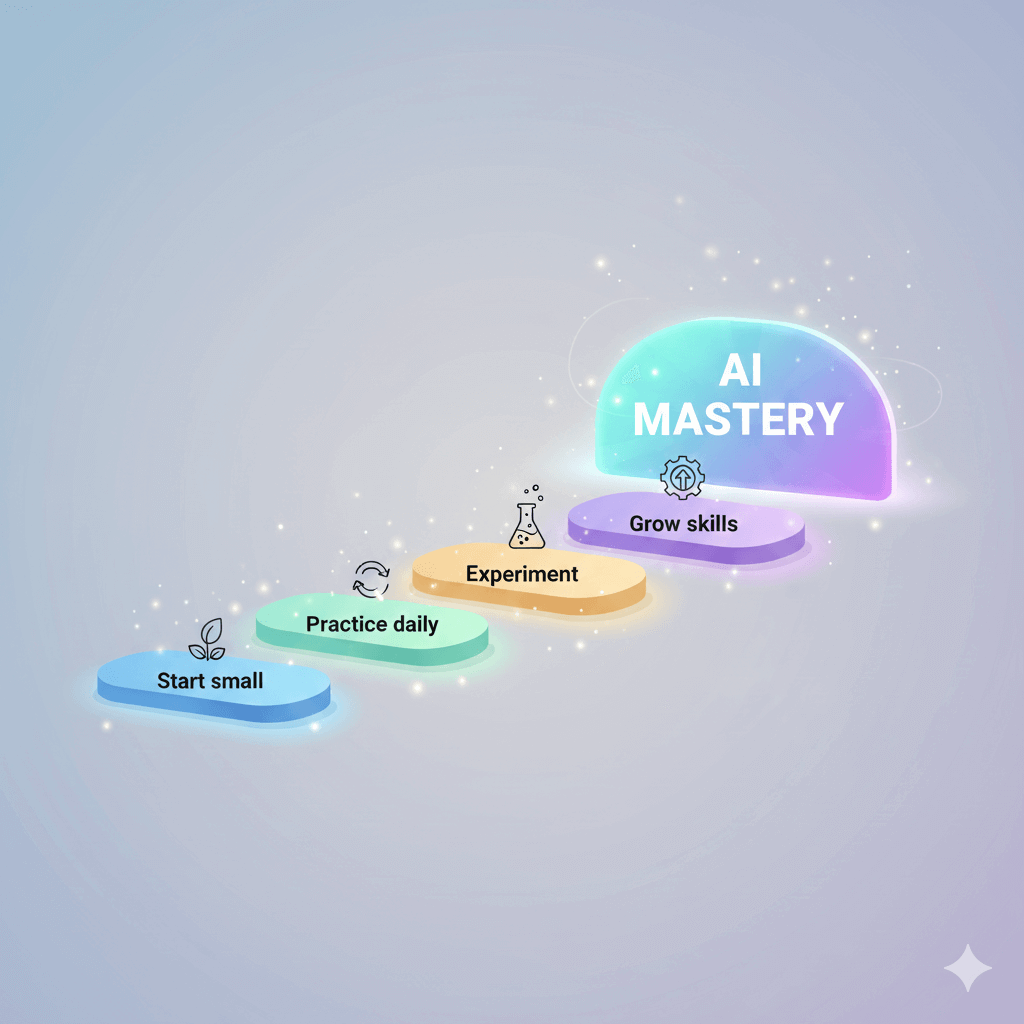
Learning AI is about curiosity and action. Instead of trying to master everything at once, focus on exploring one tool, completing simple tasks, and gradually expanding your skills. With patience, practice, and the right resources, anyone can start building meaningful AI knowledge.
Remember, you don’t need to be a tech wizard to start. Simple steps, like experimenting with chatbots or AI writing assistants, help you learn by doing. Every small success builds your confidence and sets the foundation for more advanced skills.
Begin by picking one free tool, learning its basic features, and completing a small project. Next, track your progress and gradually try another AI application. Consistency, even in short sessions, is more effective than long, irregular study sessions.AI is becoming part of everyday life, from work productivity to learning and creativity. Embracing AI tools for beginners today ensures you stay ahead and turn technology into a powerful ally. Start now, and you’ll be surprised at how quickly your skills grow.