
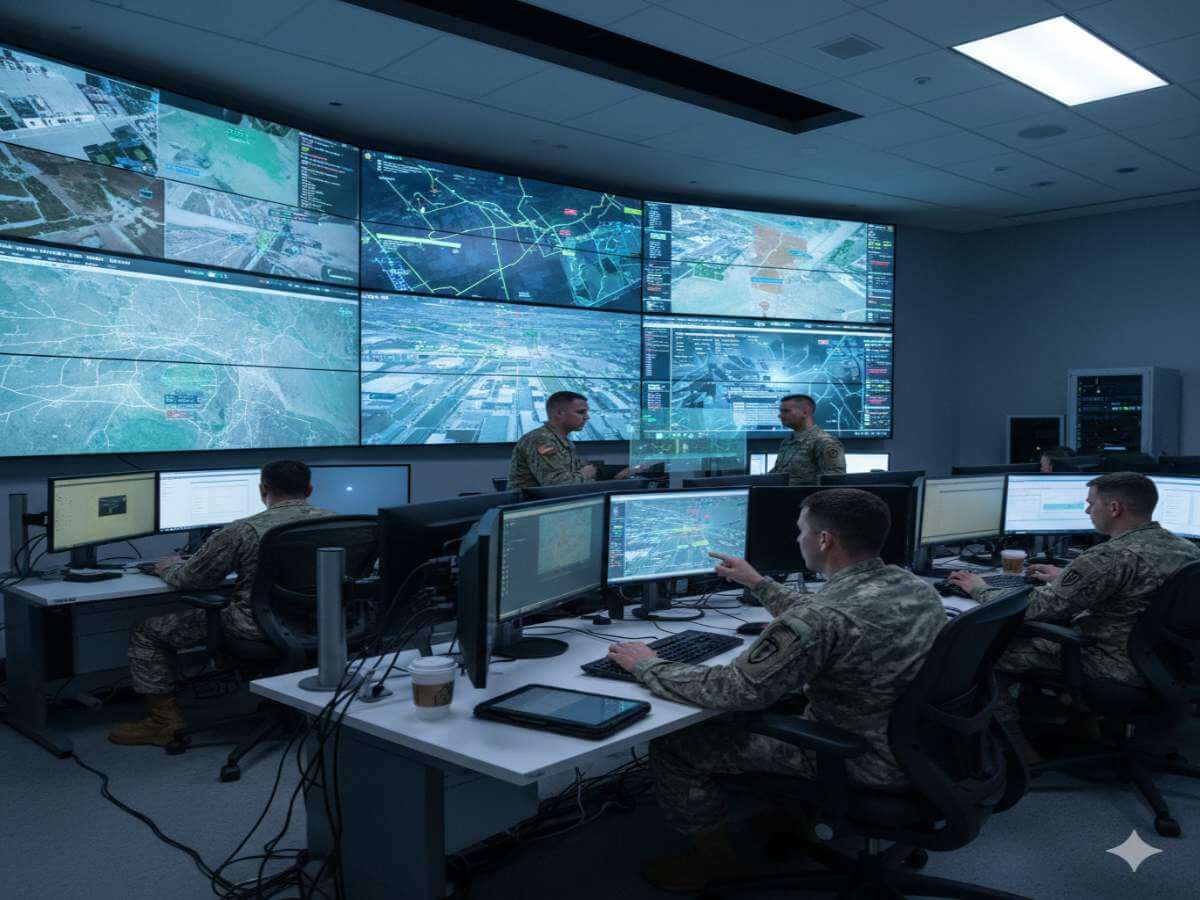
Picture a room where the only sound is the quiet hum of computers. Maps flash across screens, showing small squares appearing and disappearing—drones, heat signatures, vehicles on the move. What used to take entire teams of intelligence analysts hours to figure out now happens in seconds, thanks to artificial intelligence doing the heavy lifting. This isn’t some far-off future scenario. It’s happening right now in the U.S. Army.
We’re watching the American military go through its biggest transformation since computers first showed up in command centers decades ago. AI isn’t just a fancy Pentagon experiment anymore—it’s becoming as standard as a rifle or a radio, changing everything from how soldiers train to how commanders make split-second decisions in combat.
Creating a New Generation of AI-Enabled Warriors: The Army Just Created AI Officers
Here’s something that would’ve sounded like science fiction just a few years ago: this month, the Army created an entirely new career path called the 49B: Artificial Intelligence and Machine Learning Officer.
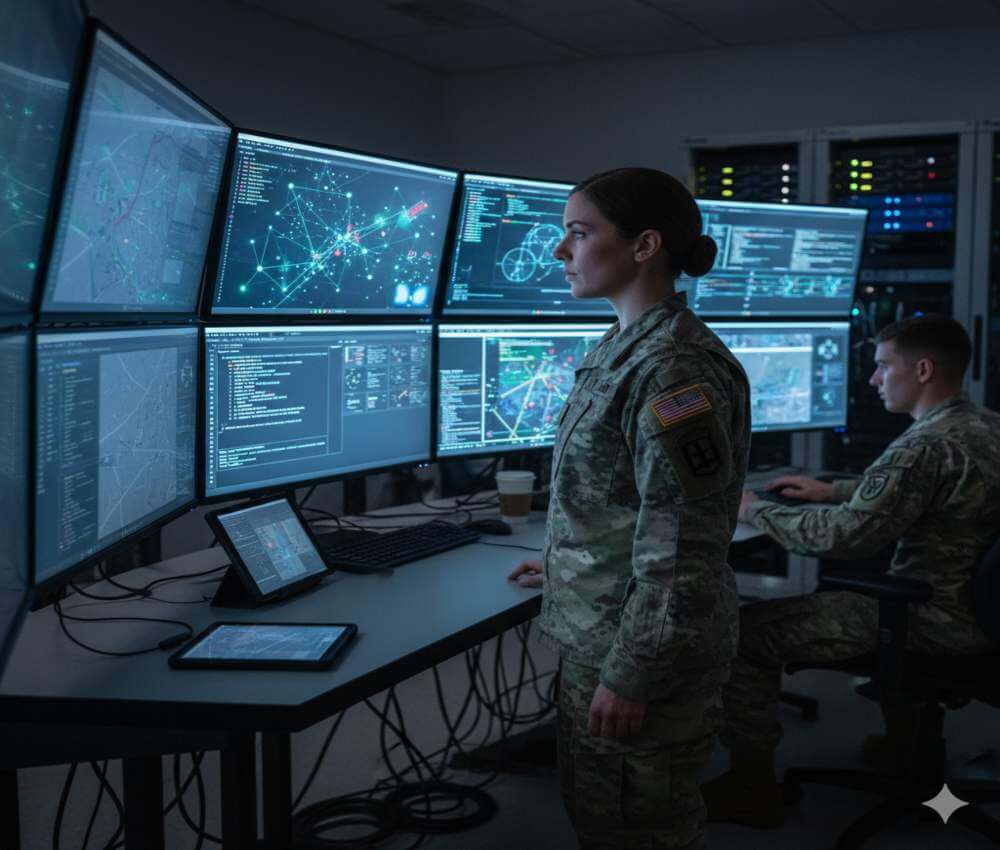
Think about what that means. The Army isn’t just using AI as a tool—it’s treating it like a core military skill, right up there with infantry tactics or armor operations.
Lieutenant Colonel Orlandon Howard, who helped build this program, put it simply: they’re creating officers who can actually design and deploy AI systems in combat, not just use them. These soldiers will speak both languages—battlefield reality and computer code—without needing some tech contractor to translate.
The first group is going through graduate-level training right now and should finish by September 2026. Why the rush? Because China and Russia already have military AI specialists, and the U.S. has been playing catch-up.
Not anymore.
AI at the Edge: Battlefield Technology That Works Without the Cloud (When You Can’t Call for Help)
Modern warfare has a dirty secret: communications fail. A lot.
Just look at Ukraine. GPS gets jammed. Radios go silent. Satellites get blinded. When that happens, even the most high-tech army suddenly can’t see or hear anything.
That’s exactly why the Army dropped nearly $99 million on a Silicon Valley startup called TurbineOne last September. Their Frontline Perception System does something most military AI can’t: it works when you’re completely cut off from the internet.
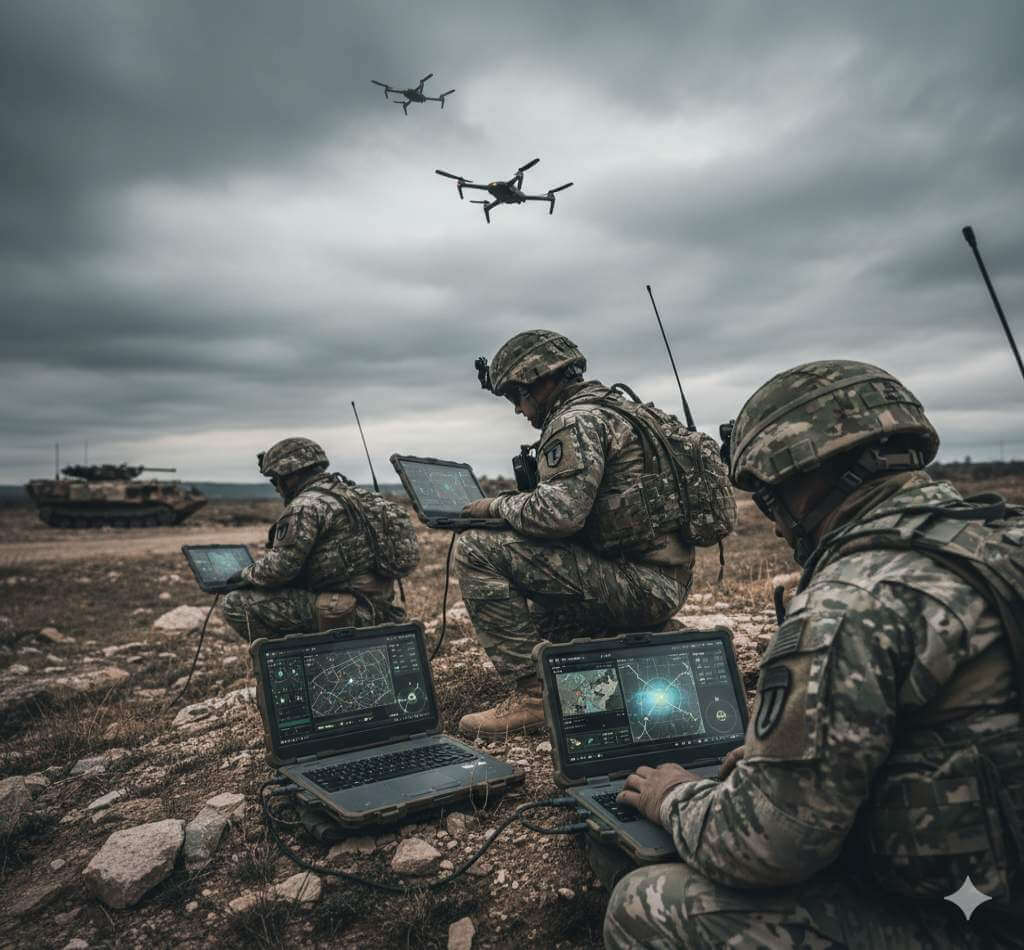
Instead of sending data back to some server farm, it runs right there on a soldier’s laptop or phone, analyzing infrared images, radio signals, and video footage on the spot. Andrew Evans, the Army’s Director of Strategy and Transformation, says tasks that took human analysts hours now take about seconds.
When you’re in a firefight, those 19 hours and 40 minutes you just saved? That can be the difference between making it home and not.
TurbineOne’s CEO, Ian Kalin, is a former Navy nuclear engineer who’s been watching the war in Ukraine closely. His takeaway: when the jamming starts and networks go dark, edge-based AI is all you’ve got left.
Pentagon Launches GenAI.mil: AI for Every Warfighter (AI for Everyone in Uniform)
While battlefield systems work quietly behind the scenes, the Pentagon made a much more public move last month.
Defense Secretary Pete Hegseth launched GenAI.mil, essentially giving ChatGPT-style AI tools to every single person in the Department of Defense. We’re talking over three million people—soldiers, sailors, airmen, Marines, and civilian employees—all with access to generative AI for research, writing, and data crunching.
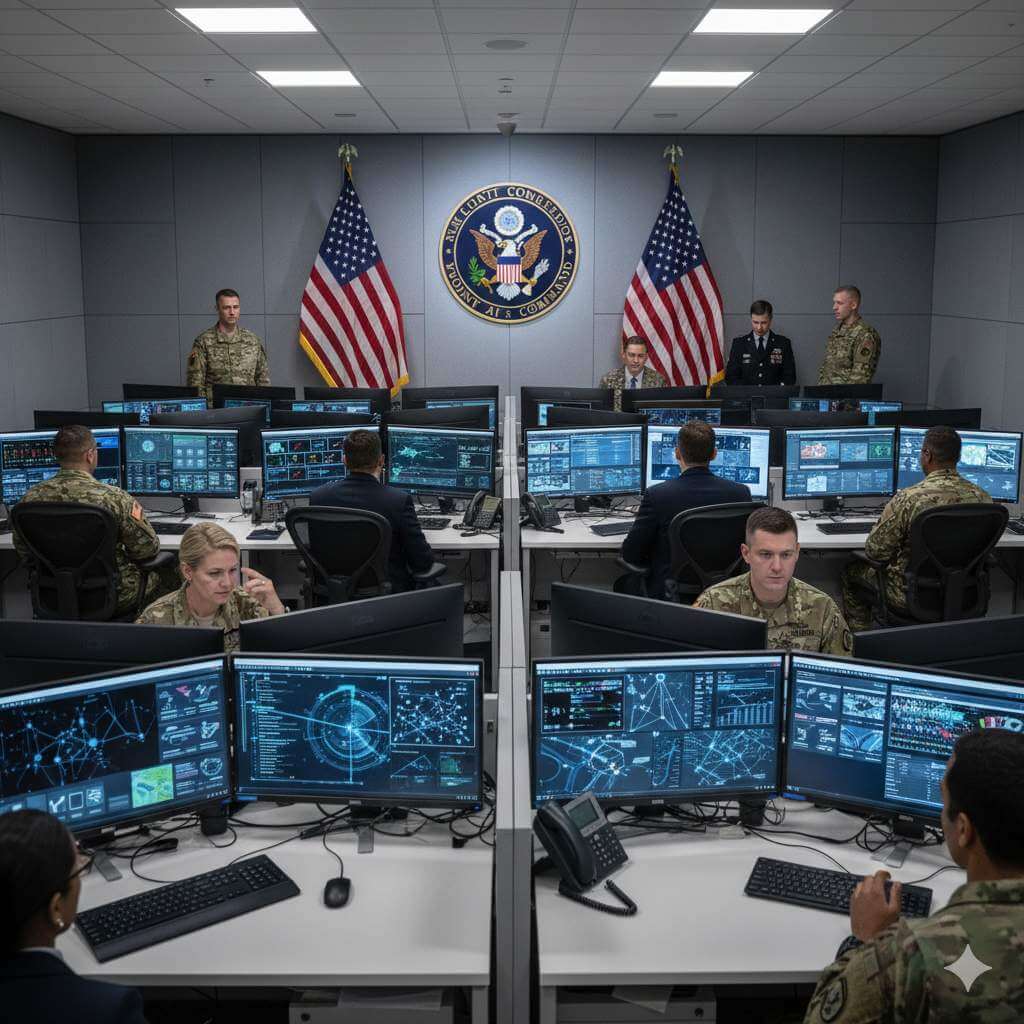
Right now, they’re using Google’s Gemini for Government, which can handle sensitive (but not classified) information. You log in with the same card you use to get on base.
Emil Michael, the Pentagon’s Chief Technology Officer, calls it a watershed moment. AI just went from an experimental project to an everyday tool across the entire military.
They’re planning to add systems from Anthropic, xAI, and OpenAI soon. And that’s just the unclassified stuff—there are far more advanced classified systems that have been running for years that we’ll probably never hear about.
From Theory to Practice: AI in Army Training and Operations (Training for Wars We Can’t Imagine Yet)
The changes run deep into how soldiers learn their craft.
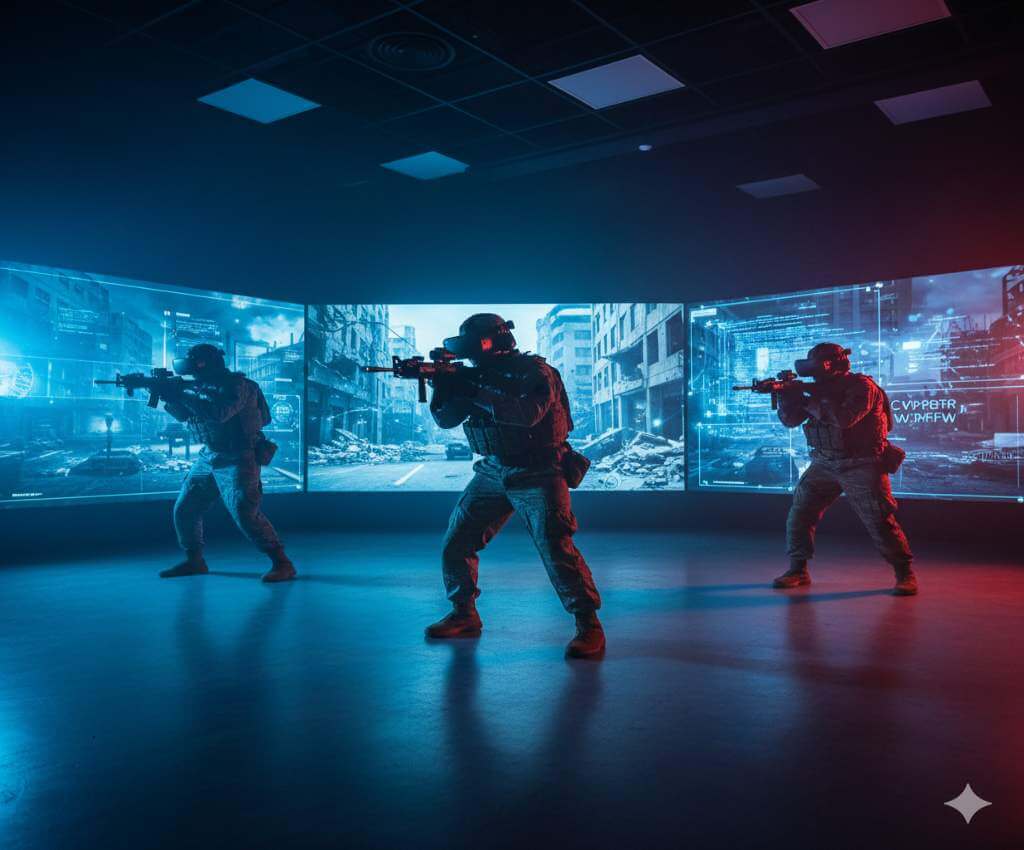
At USC’s Institute for Creative Technologies, AI now creates training scenarios that shift and adapt in real time based on what soldiers do. No more running the same drill over and over. The enemy adjusts. The cyber threats evolve. The urban battlefield morphs.
It’s training that actually behaves like the chaos of real combat.
Commanders can simulate entire campaigns—cyberattacks, urban warfare, whatever—without moving a single unit out of garrison. It’s cheaper, more complex, and far more realistic.
The Army isn’t preparing soldiers for the wars we know about. It’s preparing them for wars that haven’t been thought up yet.
Strategic Implications: The Global AI Arms Race (A Race Nobody’s Talking About)
This isn’t happening in a vacuum.
China announced back in 2017 that it plans to lead the world in military AI. Russia has similar ambitions laid out in its national AI strategy. The competition isn’t about who has more tanks or missiles—it’s about who can think faster and smarter with what they’ve got.
The Army wants AI that can process battlefield information faster than human teams. Defense directives from 2025 set hard deadlines: AI-powered command centers by 2027, unmanned systems in every division by 2026, counter-drone AI down to the platoon level within a year.
This isn’t research. It’s mobilization.

Balancing Innovation with Responsibility: The Human Factor Still Matters
For all the hype, the Army knows AI isn’t magic.
New training rules hammer home one point: soldiers need to question what the AI tells them, not blindly trust it. Algorithms make mistakes. Data lies. When something goes wrong, a human is still responsible.
And that responsibility raises some uncomfortable questions. If an AI recommendation leads to someone getting killed, who’s accountable? How much transparency should military algorithms have? There are no easy answers, but these questions can’t be ignored anymore.
Looking Forward: The AI-Enabled Army of Tomorrow (What’s Coming)
The U.S. Army isn’t just buying new gadgets. It’s building an entirely new nervous system. AI officers, battlefield systems that work offline, AI tools on every desk, adaptive training that never stops evolving—it’s a quiet revolution that’s already underway.
The next war won’t just be fought with weapons and tactics. It’ll be fought with models, data streams, and algorithms running in the background. Somewhere in a future conflict, a soldier will make a life-or-death decision based on what an AI calculated in a fraction of a second.
The code that makes that moment possible? It’s being written right now.
Leave a Reply