
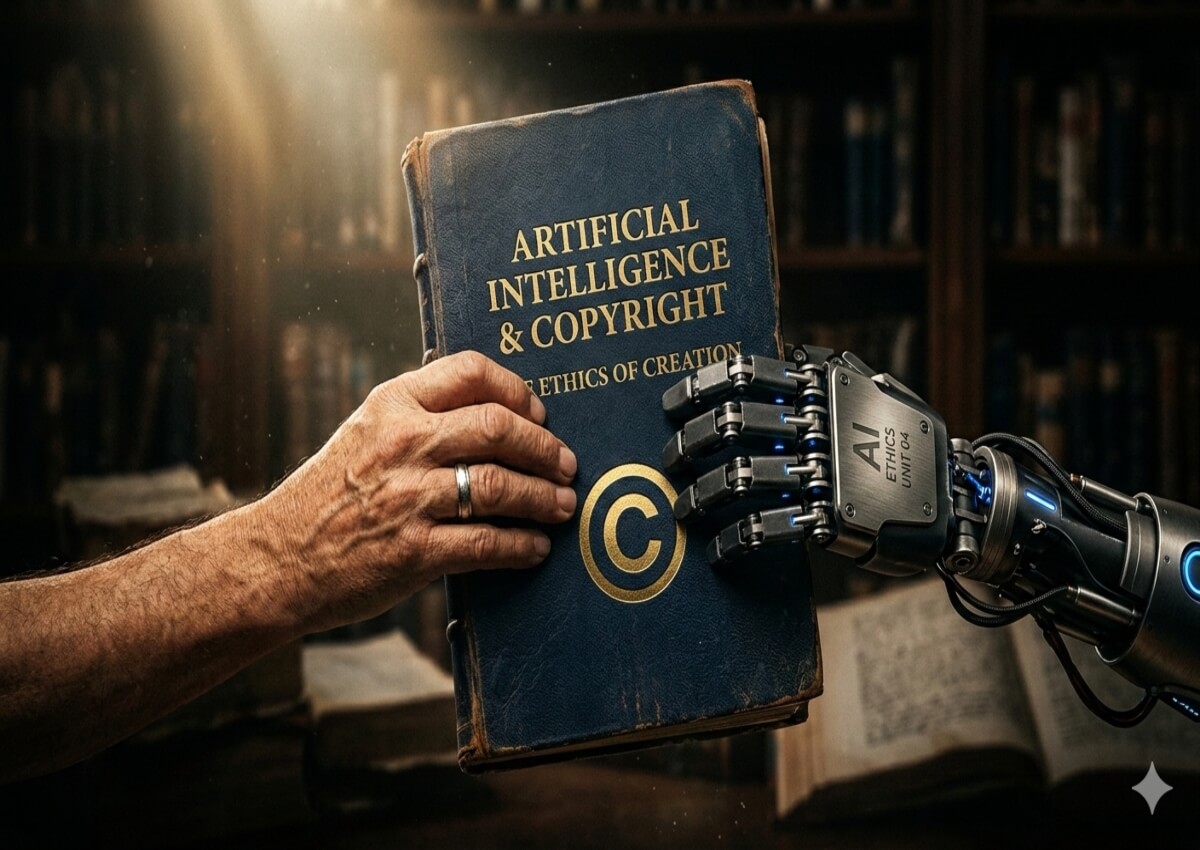
Short answer: yes. You can publish a book written with ChatGPT. But before you upload anything to Amazon KDP or any other platform, there are some things you really need to know.
I spent a good amount of time, while digging into copyright law, platform policies, and reader research to get this right. What I found surprised me. Not because publishing AI books is some secret crime. But because the gap between what people think the rules are and what they actually say is pretty wide.
By early 2026, over 2.3 million books are expected to be self-published this year. Traditional publishers still reject over 99% of submissions. AI is driving a big chunk of that self-publishing surge. Platforms, lawmakers, and readers are all trying to catch up.
This guide covers what the law says, what KDP and other platforms actually require, and how to publish AI-written work without putting your account or your reputation at risk.
Is It Legal to Publish a ChatGPT-Written Book?
This is the first question most people ask. And the good news is that publishing a ChatGPT-written book is not illegal.
OpenAI’s usage policy gives you full rights to the content ChatGPT produces for you. You can use it commercially. That includes selling it as a book.
There is one rule you can’t ignore, though.
OpenAI prohibits you from claiming AI-written output is human-written when it’s not. So if you publish a book that ChatGPT mostly wrote and you market it as your own original work, that crosses a line.
Still, the bigger legal issue isn’t OpenAI’s terms. It’s copyright. And that’s a whole different problem.
Who Actually Owns the Copyright to an AI-Written Book?
Here’s where most people get tripped up. Just because OpenAI gives you the output doesn’t mean you automatically own the copyright to it.
The U.S. Copyright Office has said this clearly: copyright only protects work created by a human. If ChatGPT wrote it, no one owns it. That content lands in the public domain the moment it’s published.
What does that mean practically? If someone copies your fully AI-written book word for word and sells it, you have no legal way to stop them. You can’t sue. You have no claim.
The Zarya of the Dawn case spelled this out. The Copyright Office protects the parts of that graphic novel that a human wrote and arranged. But the AI-generated images? No protection.
The Copyright Office’s January 2025 guidance (still the standard in 2026) does leave a door open, though. If you rewrite, rearrange, and significantly rework AI content, the human effort you added can qualify for copyright protection. Just not the raw AI output underneath it.
The more you rewrite, the more you own. It’s that simple.
The takeaway: Heavily edited and rewritten AI drafts can be copyrighted. Lightly touched-up AI output cannot. Know which one your book is.
What Amazon KDP and Other Platforms Actually Require
Amazon KDP
Amazon KDP has had an AI content policy since late 2023. You must disclose AI-generated content during upload. That includes text, images, and translations.
Here’s the part that surprises people most.
Even if you edit the AI-generated text, it’s still considered AI-generated by KDP’s definition. Editing doesn’t change the disclosure requirement. If AI produced the words originally, you have to say so.
AI-assisted work is treated differently. If you wrote the book yourself and only used AI to check grammar, suggest edits, or brainstorm, that’s considered AI-assisted. You do not need to disclose that.
The consequences for skipping disclosure are real. KDP can suspend your account or remove your book. Neither is a good outcome.
KDP also now limits authors to three new titles per day and requires identity verification. AI-generated companion guides, summaries, and workbooks have been largely blocked.
Platform Comparison: AI Disclosure Policies (2026)
| Platform | AI Books Allowed? | Disclosure Required?Volume Limits | Volume Limits | Key Risk |
| Amazon KDP | Yes, with disclosure | Yes, mandatory at upload | 3 titles per day max | Account suspension for non-disclosure |
| IngramSpark | Restricted. Quality standards enforced. | Yes, flagged on upload | No cap, but monitored | Content removed with no refund |
| Draft2Digital | Yes, with oversight | Recommended (guidelines updated 2025) | Abnormal volumes flagged (10+ books/day) | Account review or ban |
| Apple Books | Yes, quality reviewed | Not explicitly required yet | No stated cap | EU AI Act applies to EU sales in 2026 |
| Kobo Writing Life | Yes, no explicit ban | Not mandated, but recommended | No stated cap | Distributor-level scrutiny may apply |
Sources: KDP Help Center, IngramSpark Catalog Integrity Guidelines, Jane Friedman / Draft2Digital COO interview, EU AI Act 2026 implementation.
The pattern across every platform is the same. Authors who use AI responsibly, disclose it properly, and publish quality work are generally welcome. Those who flood catalogs with low-effort AI books are getting filtered out fast.
The Quality Problem Nobody Warns You About
Let me tell you what I noticed when I actually used ChatGPT to draft a full article. The output was fine. Technically correct. Organized. But it was boring.
Nothing unexpected. No real opinion. No moment where a sentence made me stop and think. It just kept going, paragraph after paragraph, saying the obvious things in an obvious order.
Researchers call this “regression to the mean.” Most large language models produce average writing by default. Without expert input and heavy human editing, the output ends up unremarkable.
Readers notice, and they react. A single one-star review saying “this reads like it was written by a robot” can tank a book’s Amazon visibility for good.
What the Research Actually Found
A peer-reviewed study published on arXiv (updated January 2026) looked at 990 reader responses after disclosing AI authorship. The results were pretty clear.
When readers found out a book was AI-written, their ratings dropped across four areas: how trustworthy the author seemed, how much they cared, how competent they appeared, and how likable the content felt. The sharpest drops were in personal writing like memoir and self-help.
A separate study from the Nuremberg Institute for Market Decisions found that readers judged human-written books more positively across every dimension they measured. The main reason? Perceived effort. Readers felt AI books involved less work, so they were worth less.
A Pew Research survey from late 2025 found that 50% of U.S. adults are now more worried than excited about AI. Nearly half said they’d enjoy a creative work less after learning it was AI-created.
That doesn’t mean AI-assisted books can’t sell. They absolutely can. But only if there’s enough real human work behind them to justify the reader’s trust.
The Hallucination Risk in Nonfiction
There’s a second quality problem that’s even more dangerous for nonfiction authors.
ChatGPT makes things up. It produces dates, statistics, quotes, and study citations that sound completely real but aren’t. And it presents all of it with total confidence.
In a memoir or novel, that’s embarrassing. In a book about health, money, or law, it can get you in serious legal trouble.
Every single fact in your AI-assisted nonfiction book needs to be verified against a real source. This is not optional.
A Real-World Example: How One Publisher Did It Right
The best example I’ve come across wasn’t some novelist who handed ChatGPT a premise and collected royalties. It was a technical nonfiction publisher who used AI the smart way.
Case Study: Technical Manual Publisher (2025)
This publisher used ChatGPT to create first drafts of technical manuals. But they built a four-step process around it.
- Step 1: AI-generated outlines and rough chapter drafts based on very detailed prompts.
- Step 2: Domain experts reviewed every section, fixing errors and adding specifics that AI couldn’t produce.
- Step 3: Every claim was checked against a primary source and cited properly.
- Step 4: Writers rewrote each chapter substantially, which created strong copyright protection for the human-authored content.
The result? Production time dropped by 40% with no copyright infringement claims and no platform flags. Both KDP and IngramSpark were fully disclosed. Not a single title was removed.
That’s the model worth copying.
How to Use ChatGPT the Right Way: A 6-Stage Workflow
The authors doing this well aren’t outsourcing their creativity. They’re speeding up the boring parts so they can focus on what actually matters.
Here’s the process that holds up legally and produces a book readers will actually want to read.
- Stage 1: Research and ideas. Use ChatGPT to map the subject. Ask it to surface arguments, counterarguments, and gaps. Treat it like a smart research intern, not a writer.
- Stage 2: Build the structure. Collaborate on an outline. AI is actually pretty good at spotting logical gaps and suggesting chapter flow. Take the structure. Plan to replace most of the content inside it.
- Stage 3: Draft the rough sections. Let AI generate first passes on parts that are repetitive or formulaic. Transitions, summaries, boilerplate. Then rewrite them. Don’t polish AI output. Replace it.
- Stage 4: Add your real expertise. This is where the book becomes yours. Your stories, your interviews, your data, your honest opinions. No AI can replicate your two years of industry experience.
- Stage 5: Get a human editor. Read the full draft aloud or hire an editor. Flat AI prose reveals itself at this stage. It’s technically correct but emotionally hollow. Fix it.
- Stage 6: Fact-check everything. Verify every name, date, statistic, and citation. If you can’t find a real source for it, cut it.
Under this approach, you wrote the book and used AI only as a research and drafting aid. That’s AI-assisted, not AI-generated. No KDP disclosure needed. And your copyright is much stronger.
Does Disclosing AI Involvement Hurt Your Book Sales?
This is the question most publishing guides skip. And it matters more than most authors realize.
Say you’ve done everything right. You used AI for research and structure, rewrote heavily, hired an editor, and fact-checked everything. Now you’re deciding how to market the book. Do you mention the AI involvement at all?
The honest answer is: it depends on your audience and your genre.
The Disclosure Penalty Is Real, But Uneven
Researchers Schilke and Reimann found what they called the “transparency dilemma.” Telling readers about AI involvement lowers their trust, even when the writing quality is exactly the same.
That trust gap hits hardest in personal writing. Memoir, self-help, narrative nonfiction. Genres where readers are buying the author’s human experience. Disclosing AI in those contexts feels like saying, “I hired someone to fake my feelings.”
But here’s the flip side. Readers with higher AI literacy showed much smaller trust penalties when AI was disclosed. Some actually appreciated the transparency. So your marketing needs to match who you’re writing for.
That’s exactly why the Authors Guild launched a “Human Authored” label in 2025. If your book is genuinely human-led, that label is now a real marketing advantage.
Which Genres Are Most at Risk?
The NIM consumer study found that the perceived effort gap between human and AI books narrows for technical nonfiction. Readers care about accuracy and usefulness there, not emotional labor. A well-researched guide on home repair or tax strategy faces a smaller penalty than an AI-assisted memoir.
Fiction and personal essays face the steepest consequences. If your book is built on lived experience, readers will sense when a real person isn’t behind the prose. No amount of editing fully fixes that.
Practical Marketing Decisions
- If your book is AI-assisted (human-led, AI-aided): No disclosure needed in your marketing. Talk about your expertise, your research, your author story.
- If you’ve disclosed AI-generated sections to KDP: Decide deliberately whether to mention it publicly. For tech or business readers, framing it as ‘researched and written with AI tools’ can feel forward-thinking. For personal genres, focus on human authorship.
- Add an author’s note inside the book: Transparency about your process is what readers respond best to. One line like, ‘I used AI for early research and structural drafts, then rewrote the entire manuscript’ signals effort and honesty at the same time.
- Keep your drafts and prompts: Dated records of your process tell a story about craft. They also protect you legally if your copyright or disclosure is ever questioned.
Pre-Publish Checklist: How to Safely Publish a ChatGPT-Assisted Book
Quality and Originality
- Run the manuscript through Copyscape, Grammarly Plagiarism, or iThenticate before publishing
- Verify every statistic, quote, date, and name. AI hallucinations are confident and common
- Have a human editor review the full draft, not just the sections you flagged yourself
- Read the entire book aloud. Generic AI prose sounds hollow when you hear it
Protecting Your Copyright
- Make sure significant human rewriting happened throughout, not just light cleanup
- Write down your creative decisions: the structure you built, the examples you chose, the arguments you added
- If you register copyright, disclose AI involvement and only claim the human-authored portions
- Consider trademarking your series name or pen name even if the content copyright is complicated
Platform Rules
- Answer KDP’s AI disclosure question honestly at upload. It covers text, images, and translations as separate items
- Save dated screenshots of your prompts and manuscript drafts. You may need them later
- If your cover image was AI-generated, disclose that separately. Platform rules cover images too
- Before distributing wide, check IngramSpark’s and Draft2Digital’s most current policies
Higher-Stakes Projects
- Talk to an IP attorney before publishing anything in health, legal, or financial advice categories
- If you sell to EU readers, check whether the EU AI Act’s labeling rules apply to your work in 2026
- Read your publishing contract carefully. Most major publishers have added AI clauses since 2024
The Bottom Line
Can you publish a book written with ChatGPT?
Yes. Is it a good idea to publish a book that’s almost entirely AI-written, with bare minimum human editing? Based on the law, the platform rules, and the reader research, no. It’s legally risky, commercially fragile, and increasingly easy for readers to spot.
The authors doing this well are not handing ChatGPT a title and walking away. They’re using it to move faster through the parts that don’t need a human touch so they can spend real time on the parts that do.
Structure, research, and rough drafts? AI handles that fine. Voice, opinion, experience, and emotional truth? That’s yours. And in 2026, readers know the difference.
Authenticity has become the premium signal in an AI-saturated market. The authors who get that, and who use AI as a tool rather than a replacement, are the ones building reader trust that lasts beyond any algorithm update or platform policy change.
Sources
- OpenAI Usage Policies
- U.S. Copyright Office: AI and Copyright
- arXiv: Reader Perception Shifts upon AI Authorship Disclosure
- NIM: Consumer Response to AI-Generated Books
- Authors.AI: What an AI-Wary Public Means for Authors
- Jane Friedman: How AI-Generated Books Could Hurt Self-Publishing
- The Table Read: How AI Will Change Book Publishing Forever in 2026
Leave a Reply